Urban design can transform lonely cities into social societies

NEW YORK: One architect wants to transform urban design to enable lonely cities to become intensely connected neighbourhoods.
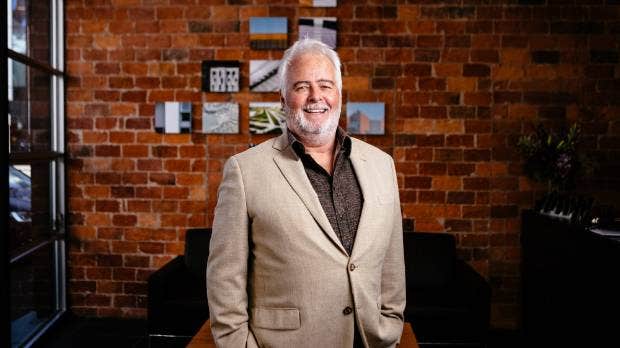
Architect David Gibbs’ principles for creating connection through good urban design are simple.
“We need people bumping into the same people regularly to get a connected society. We all know friendships can be made just by bumping into people when they walk their dogs and to a lesser extent, cycling.”
When the firm he founded 35 years ago, Construkt Architects, took on the design of Auckland’s Hobsonville Point, a medium-density development intended to model connected living, he says the density target was 45 dwellings per hectare, three to four times the average suburb density.
“That wasn’t done through greed or avarice, it was: If we can densify the community so people do feel connected, it will produce a different result.”
The formula included narrow roads so people felt comfortable crossing them, good cycle and walkways, a mix of standalone and terrace housing on relatively small sites, and apartment blocks, with the deliberate paucity of private space made up for with parks and walkways.
The development is past the half-way mark of an expected 4500 homes by 2024, built on the former Hobsonville air force base, shaped by then Housing New Zealand, and the former Waitakere City Council, a self-styled “eco-council”.
Gibbs sees Hobsonville Point’s connectedness in stark contrast to the rest of Auckland’s traditional urban and suburban landscape. Suburbia, often governed by streets, roads, and cars, has divorced our contact from others, he says.
“Some would argue the suburbs have been a retrograde step. They are only a recent innovation – they came with cars. It is because of the limitation of people’s contact with others, and critically the divorcing of everyday shopping from where people live, so they don’t develop the friendships that one sees happen in Europe where shopping is closer to where people live.”
Hobsonville Point has not spawned many imitators, though Gibbs says it has shown urban designers, architects, and council planners, what can be achieved. Wellington and Auckland are probably leading the charge and understand connectedness, through the development community and the councils.
But there remain common practices that work against social connectedness, such as cul-de-sacs in suburban subdivisions which deter physical connection and walkability. “Even if you can connect them with lanes, which can come with safety concerns, it is always better to have a good, gridded street system.”
Individual properties can also contribute to a poor social fabric, through high walls and fences along the street frontage which prevents contact. “You’re out there doing a bit of gardening in the front yard, and your neighbour stops to have a chat, that’s how social fabric is built.”
By 2008, more than half of the world’s population were living in cities, with the United Nations projecting that, by 2030, five billion will be living in built-up areas. But while communities are forced to navigate life in the midst of the global Covid-19 pandemic through increasingly distanced social measure like mask-wearing, remaining at two metres, avoiding people when we feel a twinged throat, and managed isolation, the archetypal depiction of a so-called ‘lonely person’ as a senior citizen has combusted.
There’s growing evidence that loneliness is touching all facets of society with surveys showing young people often feel disconnected from their peers, and young professionals more likely to live in cities find themselves going weekends without talking to people.
“On the one hand, the pandemic has really highlighted how important it is to connect with the people around us, but on the other hand, it has made it more difficult to do that,” says Holly Walker, deputy director at public policy think-tank, the Helen Clark Foundation.
She has produced a report examining how public policy can be used to address loneliness, theorising that public policy could be used to create spaces where people can come together, and help engineer a sense of connectedness. Much of its success could hinge on how successful New Zealand is at stamping out the virus.
“It’s a very different prospect to design neighbourhoods for socially-distanced interaction than it is for general interaction where we are living under conditions where there is no community transmission.”
Creating communal green spaces, and footpaths and cycleways where pedestrians and cyclists can observe social distancing are among simple design elements that should be factored in when creating living communities, she says.
New Zealand has been embracing the concept of whakawhanaungatanga – or kinship – through urban design for some time. One of the best homegrown illustrations is Earthsong Eco-Neighbourhood, a co-housing community on a repurposed orchard in the west Auckland suburb of Ranui.
Fruit trees, composting and communal vegetable gardens dot the areas between private gardens and the balconies of the 32 terraced houses and eco-apartments, home to around 70 residents. Earthsong’s design favours pedestrians, encouraging opportunities for both social and physical interaction. Cars are parked at the neighbourhood’s perimeter.
It was built on the co-housing concept developed in Denmark in the late 1970s, focusing on creating an environment where people interact with each other, underpinned by sustainable building philosophies, for example terraced houses that face front and back, rather than side-by-side, allowing parents to watch their children play together in a safe environment.
Earthsong’s main dining hall features a high cathedral ceiling and large windows and doors to allow natural sunlight to pour in, providing an acoustic environment where residents can interact. At the community’s heart is the common house, a large meeting hall, sitting room, kitchen, shared laundry facilities and children’s playrooms.
“It’s an intentional neighbourhood. That’s how we like to describe it,” says founder Robin Allison. “There’s community, but we also value the sense that people are individuals and households as part of a group of households. So there are both of those elements in there.”
At Wellington’s Greta Point, papakāinga housing complex two pou carved by Ihaia Puketapu greet residents and visitors, standing tall against a lush, green bush backdrop. In recent years, the Te Aro Pā Whenua Trust spearheaded the $3.6 million development to provide low-cost inner city housing for its descendents.
The complex is situated in one of the most desirable locations in the city, offering views of the harbour. Living as one is a central principle in Māoridom, with the complex fostering a close sense of whakawhānaungatanga, or getting to know each other.
Not every urban environment will have the luxury of semi rural settings or coastal views, but Gibbs says density in apartment living shouldn’t be a deterrent for good design to foster connectedness.
“There are ways to increase the frequency of accidental meetings by the creation of a single way into the building, and making an attractive space where people feel free to linger. If you have a mean little lobby, people won’t stay to chat. If you put in a couple of sofas in a comfortable area for people to sit, you vastly increase the changes of people saying, ‘let’s have a chat’.”
His colleague, architect Kate Watson was inspired by an apartment building she lived in that was made up of two adjacent blocks of 16 dwellings with a common courtyard. The relatively small number of apartments and their lay out drove social engagement.
“90 per cent of people knew each other, and there was a tomato growing competition in the courtyard once.”
While features in some new developments include common areas, either outdoor communal decks or even communal lounges, constructing smaller, more intimate common spaces should also be considered in the development of student halls of residences, Watson says.
Victoria University of Wellington masters’ student Anya Seth worked in conjunction with architectural firm WSP to see how these spaces can improve the community experience for their residents. Despite being surrounded by others in the peer group, Seth said many more introverted members of the student body reported having a poor experience in the halls.
With many of the country’s university halls being set up in old office complexes, Seth believed the often austere environments can be modified to better reflect the diversity of the residents and make them more homely and inviting.
“I think office buildings can still be repurposed in such a way that [they] facilitate the needs of students, but I think the way that it’s currently done is not necessarily done with the students’ wellbeing at the centre of it,” Seth said.
Healthcare-oriented design that considers wellbeing should at the fore. Consideration should also be given to sources of light, tactility and even how a space smells.
Even small things like integrating green elements, like indoor plants, introducing exposed timber, can all help bring life to a space, inviting people into them and in turn encouraging greater social interaction, she said.
“I think of the main findings from the research was about diversity and connection, creating a diversity in space that reflects the diversity in the residents. Within larger, communal areas, making sure that there are lots of different spaces for different kinds of people.
Urban design teams embedded in the country’s government agencies are also looking at ways to create spaces where people can safely interact.
Wellington City Council urban design manager Dr Crystal Filep described growing up in suburban United States, as “quite isolating and lonely”.
“One of the things urban design can be really helpful for is thinking about the spaces in between buildings and how buildings help to shape places. And that’s particularly effective when you’re able to look at more compact living arrangements where you get more people around the space and more people using that space and spending that time together.”
Back in Auckland, Kāinga Ora is focused on creating a new version of the ‘barefoot neighbourhood’, orienting homes to allow parents to see their children playing outside as well as building pocket parks and playgrounds help create liveable neighbourhoods.
The development will see around 10,000 new healthy homes built there in the next 10 to 15 years.
Working with the local community, Kāinga Ora is co-creating a ‘play street’ to improve the safety of children living in its Roskill Development. It will provide children with opportunities for natural play, places where people can gather and will provide a safe pathway for May Road School students to get to school.
The neighbourhood would have pedestrian links between neighbourhoods and schools and shops, and easy access to public transport. Neighbours would also have more opportunity to get outside and meet one another thanks to improved walkways and cycleways, community gardens and green spaces, a Kāinga Ora spokesman said.
“Rather than one kid on their own in their backyard kicking a ball around, there’s a communal space where kids can get together and run around, and families can gather for a birthday party or a barbecue.”
Filep says urban design has a strong advocacy role to play in connecting communities.
“Not just creating corridors of movement – by getting from A to B – but actually asking, what is the quality of the space at point A? What is the quality of space at point B? And what is the quality of the journey in between? Why would people want to take that journey?”