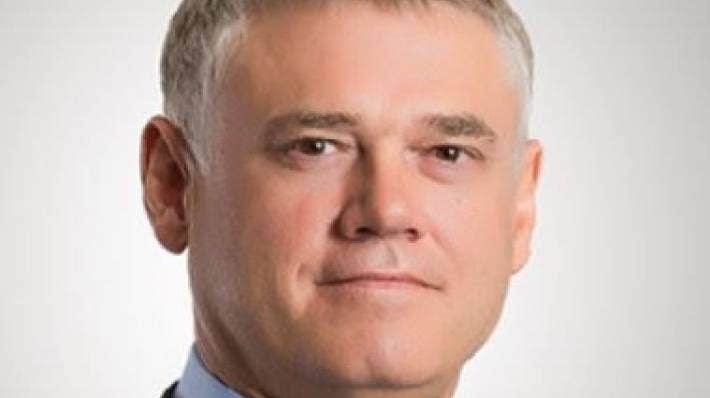
Russian billionaire investing in affordable housing as ‘thank you’

NEW YORK: A trend for cashed up migrants saying ‘thank you’ for a safe haven is emerging.
A Russian billionaire with a luxury lodge in Northland is extending his stake in New Zealand by investing in affordable housing.
Alexander Abramov, who built a $50 million luxury lodge complex on an estate at Helena Bay, north of Whangarei, is investing in New Zealand property development through a vehicle called Targa Capital.
The company partners with property developers and has Overseas Investment Office (OIO) consent to invest in seven residential property developments throughout New Zealand over three years.
All the shares in Targa Capital are owned by Endurance Capital, the directors of which are Moscow-based businessman Ian Cochrane, Auckland businessman Chris Seel and Auckland lawyer Geoffrey Hosking. Seel owns all the shares in Endurance.
Abramov’s involvement in Targa was revealed in a 2019 application to the OIO for investment approval for investments that might relate to sensitive land.
In the application, Targa disclosed it was ultimately controlled and received the majority of its funding from Abramov, who made his fortune buying struggling mines and steel mills in Russia and Ukraine.
Abramov’s representative in New Zealand, Chris Seel, who is based in Albany just outside of Auckland, said he could not disclose the amount of the total investment intended but everything “we do is with a New Zealand partner”.
So far they had been in partnership with four organisations and completed 11 projects, mostly in Auckland but also in Wellington and Queenstown. The projects were affordable, high quality, low-end apartments, Seel said. Two developments were Kiwibuild projects. Kiwibuild uses price caps to set the maximum price a KiwiBuild home can be sold for.
“We really see the opportunity of affordable housing in New Zealand. It’s really obvious there’s a huge need and the Government wants people to do it and New Zealand developers are limited in terms of their finances. We want to be part of that,” he said.
“We were operating prior to the foreign owner ban and it caused us to stop supporting developments for about 18 months, which I don’t think was in New Zealand’s best interests, but it took that long to figure out what the rules were and to go through the process to carry on.”
Targa and its associated entities were restricted to supporting apartment developments with more than 25 dwellings.
Seel said Abramov liked New Zealand and “I’m here, and we do this in partnership”.
Abramov ploughed millions into the 215-hectare seaside property at Helena Bay in 2009 and transformed it into a country estate with a gated luxury resort complete with a 25-metre swimming pool. One of the conditions of his purchase was that he was of good character.
The OIO has confirmed it questioned Abramov or his representatives about allegations arising from a massive stash of documents from the defunct Ukio Bank in Lithuania when considering the investment application in 2019. The documents were obtained by the Sarajevo-based Organized Crime and Corruption Reporting Project (OCCRP) in 2017.
An OCCRP report, based on 1.3 million bank transactions from 238,000 companies in the documents, revealed what it claimed was a web of complex deals moving Russian money to and from shell companies, some of which appeared to be linked to Abramov and his business dealings between 2006 and 2013.
The report claimed two companies linked with Abramov appeared “deeply entwined with the Troika Laundromat, a network of shell companies that operated from 2006 to 2013, moving at least $US4.6 billion (NZ$6.41b), enabling its users to hide assets, evade taxes or launder money”.
The OCCRP said the Ukio documents did not contain any specific evidence that a firm or its employees broke any law or committed any crimes.
Seel said the allegations were “baseless”.
The OIO said part of its assessment of the investment application entailed seeking and receiving direct comment from Abramov and his representatives about the allegations in the OCCRP report.
“The allegations could not be substantiated,” it said.
“We are satisfied the applicant has demonstrated the investor test is met and the applicant is likely to comply with the mandatory and additional conditions of consent,” the consent said.
“The applicant considers its proposed investments will result in an increase in the number of residential dwellings constructed in New Zealand.”