‘Retiring is the biggest mistake you can ever make’
MELBOURNE: Perhaps your dream of retirement involves sailing off into the sunset on a round-the-world cruise? Or maybe you’re planning to play 24/7 golf, interspersed with the odd spot of Sudoku?
Lyndsey Simpson says those of us who are thinking of this stage of our life as one long holiday have got it all wrong. In fact, the founder of 55/Redefined and author of a new book, The Age Rebellion, doesn’t even like the word “retirement”.
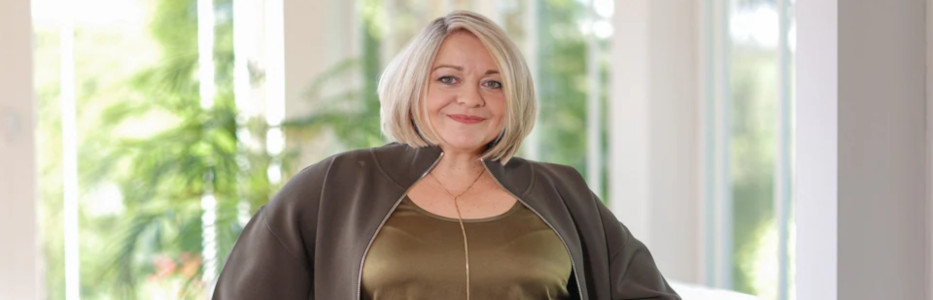
“I encourage people to say they’re in their ‘rewirement’ phase or moving into the next chapter,” says Simpson. With her blunt blonde bob and thick, black-framed glasses, she looks more corporate than rebel, but she’s visibly passionate about why we need to rethink the second half of our lives.
“Everything we have told ourselves about retirement is no longer relevant. It’s about feeling inspired, not retired.”
It was 2018 when Simpson got inspired herself, via a phone call that would change her life. After nearly a decade working in banking for Barclays, Simpson was heading up a large recruitment and HR outsourcing company, when a contact from Natwest called her to ask if she could help find bankers who had been working in the 1990s to provide advice on a regulatory review.
“I still had some of my old contacts from my Barclays days, so I rang them up to see if I could coax them out of retirement,” she explains. “These were people who could afford to have a very comfortable time, but every single person I spoke to said: ‘Retirement was the worst decision I ever made.’”
Simpson, who was then 41, had her own plans to retire at 50 and sail the Mediterranean with her husband Andy, who is 10 years her senior. But speaking to these former bankers gave her second thoughts. “I realised that what most people needed in the second half of their life was a sabbatical,” she says. “They didn’t need to check out of life for the next 50 years. Retirement, as we’ve been sold it, is a trap, not a dream.”
Simpson quotes studies which have found that delaying retirement by just one year lowers your risk of mortality by 11 per cent. An Austrian study from 2020 estimates that for men, retiring one year earlier causes a 5.5 per cent increase in the risk of premature death. “What the f–k?!” she writes of this study in her book. “Why do we encourage our husbands, fathers, brothers and friends to retire early?”
There are many theories for these findings, including a loss of purpose and routine, social isolation, and increased alcohol and reduced exercise in retirement. But researchers have also pointed out that those who retire early are often already in poor health.
Whatever the truth behind the link between retirement and mortality, Simpson’s own research has found that many people have a mental health slump about 12-18 months after their retirement party. “I call it ‘The Retirement Rainbow,’” she says. “At first you have this big to-do list, but you burn through it in 12 months, and then it all gets repetitive.”
Partly this is because we’re all massively underestimating how long we’ll live for. Better healthcare, nutrition and education mean a 60-year-old in the Western world today has a 50/50 chance of living to 90, and a 40-year-old can expect to live to 95. “Scientists say that there’s a person walking the planet right now who will live to 150,” she says. “People think they’re going to love seeing friends and doing up the garden, but these things alone are not enough to fill 24 hours a day, seven days a week, for years and decades to come.”
In 2021, Simpson launched her company, 55/Redefined, a platform that helps companies attract, grow and engage over-50s. Within three years, it had more than a million over-50s signed up. She now travels around the world advising the likes of Diageo, AXA, Amazon and Barclays that “if you don’t have an age strategy, you don’t have a growth strategy”.
Her book is a call to arms for midlifers to create an “audacious, long-term vision” for the next decades. It is, she contends, remarkably “un woo woo”, and instead features practical exercises and inspiring case studies.
There’s Phil Goddard from Cambridge, who at 56 left his six-figure salary as a telecoms executive to retrain as a postman. In his viral LinkedIn post, he wrote: “I’m averaging 15km a day walking. My feet ache, and I have muscles in my legs that I never even knew I had. But I’m working outdoors, I get to meet new people… I’ve forgotten how good that makes me feel.”
There’s also Simpson’s family friend, Eddie Dickens, 83, who set up his first business at 63 and another at 70. There’s a 76-year-old woman working in Fortnum & Mason whom Simpson meets while shopping there, and a Sky engineer who comes to fix Simpson’s WiFi who’d been a waitress before retraining in her 50s.
But of course, it’s not always easy to rebel against the accepted work and social norms for what someone in their 50s to 80s wants from life. Simpson, who grew up in Peterborough, says that as a 48-year-old woman working in the tech industry, she’s experienced ageism herself first-hand. She recalls being in a room of tech entrepreneurs who were all young men in hoodies, looking at her in her dress and heels as if she were their mum.
Still, she says, “these extra years are a gift and an opportunity. It’s time to retire retirement”.
Simpson questions why we traditionally only have one stint of education in our younger years, and why we race through work like it’s a sprint, not a marathon. “I like to ask people in their 50s and 60s: ‘What do you want to be when you grow up?’ It’s a valid question to ask someone with decades of potential ahead of them,” she says.
Simpson points out that the over-50s are now the fastest-growing subgroup of new entrepreneurs in the UK and the US. “We need to stop telling people that 70-somethings are only fit for wearing slacks and dishing out toffees to their grandchildren – they’re running companies and just hitting their stride.”
Our shifting lifespans are already having big consequences for how we live our lives, for example, the surge in divorces among the over-60s. “People are realising: ‘Wow, I might have another 30 years with this person,’” she says.
This massive demographic shift has implications for all of us. The IMF predicts that three-quarters of the projected global slowdown in economic growth could be avoided by making jobs work for the over-50s.
“I think luxury industries especially are really waking up to where the money is,” she says. “70 per cent of the world’s wealth is held by 50- to 70-year-olds, and we’re the fastest-growing cohort on the planet. It’s predicted that there’ll be well over 21.5 million people [globally] aged 100 or more by the end of this century.”
Simpson acknowledges that our minds and bodies do change, and that not everyone will want to – or will be physically fit enough to – continue with their current job. But she says that advances in medicine, nutrition and lifestyle have fundamentally altered the ageing process. She quotes a report which found that a 70-year-old today has the same cognitive abilities as a 53-year-old in 2000.
Energy ebbs and flows as we age. But instead of dropping out of work overnight, Simpson is suggesting a “five- to 10-year glidepath” from your current job into your next phase, and using more creative methods to give you flexibility, such as sabbaticals, “grandparents’ leave” and digital nomad schemes.
She’s currently working with a company that is offering a “retire and rehire” phase, giving older employees the opportunity to cash in their pensions, but be rehired as gig workers. “What’s really interesting is these policies are designed for older staff, but they’re really popular with the youngest employees too, because Gen Z also want to pursue portfolio careers.”
Simpson and her husband, Andy, split their time between their home in Laxton, Nottinghamshire – “no kids, no pets!” – and a base in London. Her company, 55/Redefined, has 25 employees who work remotely, based all over the UK. Andy has delayed retirement too, and now heads up the American arm of the business, working four days a week so that he can “play tennis and see his mum” on Fridays.
Simpson is a passionate believer that we need to recalibrate our expectations of what older people can do. “Remember during Covid, when Captain Sir Tom Moore was 99 years old and walking laps of his garden, and we were all like: ‘Wow!’” she says. “That won’t be extraordinary for much longer.”
We talk about Sir David Attenborough, who is about to turn 100, and is still making documentaries, and Gloria Steinem, who is about to release her memoirs, aged 92.
“When I hear people in their 50s and 60s say that they can’t try something new because they’re ‘past it,’ I feel enormous frustration,” says Simpson. “Without realising it, they’ve placed enormous restrictions on themselves. Why can’t you reskill to be a teacher, upholsterer, robotics engineer, AI specialist or anything you want to be?” Her own research has found that 92 per cent of over-50s would stay working for longer if they could reskill or change their career path.
In her book, Simpson details her brother Darren’s story. At “Level 48” (Simspson prefers to say this rather than calling someone 48 years old), he felt trapped in his job as a general manager at a supermarket. He retrained as an audiologist and found his purpose in life.
In 2022, Simpson met Richard Branson in New York at his site for his Virgin Hotel, having been introduced by one of her investors who worked for Virgin. He’s since become a champion of the cause.
“He’s the epitome of an age rebel,” she says. “He’s told me that people have said to him: ‘Oh, now you’re in your 70s, will you be stepping back?’ or: ‘Now your wife’s died, will you be slowing down?’ and instead he’s starting new businesses and is expanding his cruise line.”
When I ask Simpson whether she has any plans to retire, I – of course – get a resounding no. “At some point, I plan to work less and live more, and recalibrate the balance,” she says. “But I don’t want to stop working ever.”
She says this isn’t the time to settle or conform to expectations about “people our age”. “We are not the midlifers of our parents’ generation, and we are definitely not the midlifers of our grandparents’,” she says. “We are pioneers.”