Retirees in court victory over developer sunset clause chicanery
MELBOURNE: The sneaky developer trick of exploiting “sunset clauses” to terminate off-the-plan contracts has suffered a major loss after desperate buyers took on Melbourne property giant Bensons Property Group in court and won.
The ruling in the Queensland Supreme Court will put developers on notice, experts say.
“It is a really big deal,” Griffith University Dean and property expert Professor Sacha Reid said.
“It’s the first time the courts have said to a developer that they can’t end a sunset clause like this for their own benefit.”
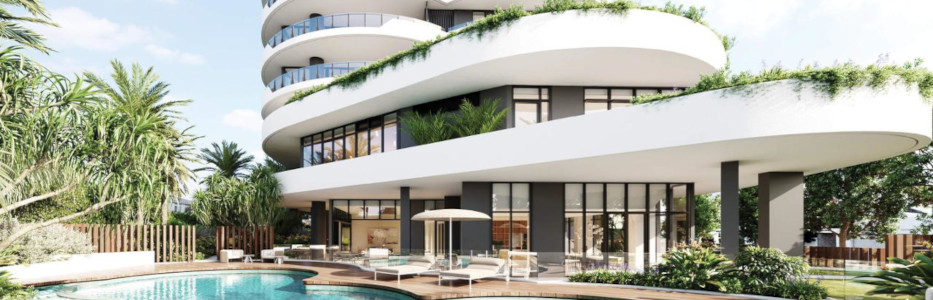
Linda Malligan, Claudio Cantavenera and Maria Salonia bought apartments in Bensons’ $485m 41-storey Chevron One tower on the Gold Coast in 2021 during the pre-build phase, shelling out between $760,000 and $840,000 for units.
But as the complex neared completion this year, Bensons tried to cancel their contracts, using sunset clauses as justification.
Sunset clauses are contractual terms designed to protect off-the-plan buyers in apartment developments, giving them the right to exit a contract if a development isn’t completed within a particular time frame.
However some developers have exploited the clauses in recent years to push out original buyers and negotiate new contracts to leverage skyrocketing property prices.
“A developer has to sell about 80 per cent before a financier will come on board,” Professor Reid said.
“That’s why they need pre sales early on … but then if the property market is on an upswing, they can benefit at the back end by cancelling it through the sunset clause and reselling those contracts and making more money.”
In a landmark decision, Justice Paul Freeburn delivered a major blow to the sunset loophole, ruling that Bensons could not rely on a breach of its own contract to discard the original buyers.
The 2021 contract between the parties embedded sunset dates between April and May 2026 and crucially, the terms explicitly stated that Bensons “must” deliver the scheme by those dates.
Bensons argued it only needed to make “reasonable efforts” to settle, but Justice Freeburn torched that position.
“It is doubtful that a ‘reasonable efforts’ or ‘best endeavours’ obligation can be implied from the mandatory word ‘must’,” he said.
“The clause required that Chevron establish the scheme, register the plan and effect settlement by the Sunset Date.
“Chevron’s argument that the clause did not create such an obligation to settle on a particular date clashes with the actual words used and conflicts with the meaning that a reasonable businessperson would take from those words.”
Bensons also tried to use the Covid pandemic as an excuse to escape the strict boundaries of the contract, saying it was signed at a moment when the construction industry was still reeling from supply chain disruptions and uncertainty.
Justice Freeburn said uncertainty principles were “well catered for” in other clauses and the company was entitled “not to proceed with the project in a wide range of circumstances, including if the project was or became unviable as a business proposition.”
Bensons also tried to argue that because the buyers had a right to terminate the contract after the sunset date, they also held a “reciprocal right” to exit.
But Justice Freeburn noted there were no provisions listed in the contract to justify that move.
“Do the contracts contain clear express provisions showing that the intention was that either party could rely on their own breaches of their primary obligations to bring the contract to an end? I am unable to see such a provision, and none has been identified,” he said.
Justice Freeburn ruled that the contracts remained “valid and binding” on the parties.
Professor Reid warned, however, that exploitation through sunset clauses would need to be solved through legislation rather than the courts because most contracts, which can be up to 600 pages long, are written on a “case-by-case basis”.
Bensons Property entered voluntary administration in December 2024 with about $811m in debt and a $1.5bn project pipeline.
The company, led by managing director and CEO Rick Curtis, survived administration and exited in February last year after creditors voted to back a deed of company arrangement.
Alongside Chevron One, the developer is building the Drummond House complex in Carlton and recently completed the 24-storey Liberty One tower in Footscray.