Planners approve nine-storey boomer apartment complex project
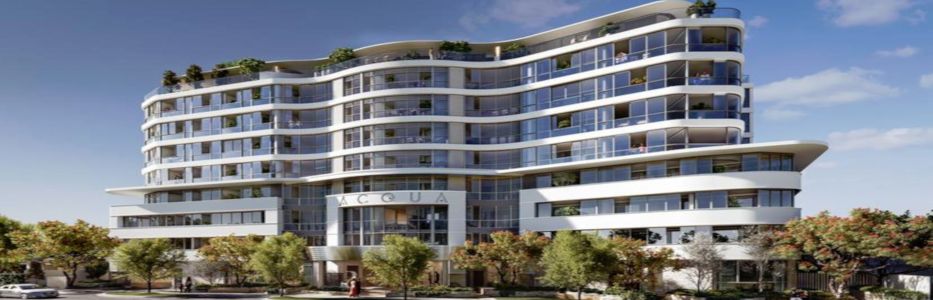
LOS ANGELES: Plans for a $38.1 million nine-storey apartment complex in Como have been given the green light by State planners despite the City of South Perth urging they knock back the development.
Metro Inner-South Joint Development Assessment Panel members, excluding City of South Perth councillor Glenn Cridland, approved the plans from multiple landowners on Tuesday, April 18, to build 121 apartments with either one, two or three bedrooms at 202 to 204 Melville Parade.
City officers recommended JDAP members refuse the plans for reasons including the developer seeking a “significant number” of variations, was an “overdevelopment” of the site, was too tall and provided inadequate visual privacy and building separation.
“The proposal is likely to negatively impact the amenity of the locality as the development is inconsistent with the existing and desired character of development within the area,” a report said.
But PRD Developments director Angus Murray, who spoke on behalf of the landowners, said the proposed building was “not a case of overdevelopment”.
In a submission to the JDAP, he wrote that there was an “obvious demand” for new affordable accommodation with access to public transport and more amenities.
“Our project brief stemmed around an affordable compact product to target young professionals and first-homeowners to not compete with all the larger, more expensive products on the market,” he said.
“To capture this market, we need a focus on sustainability and, given the compact product, extensive quality communal amenities.
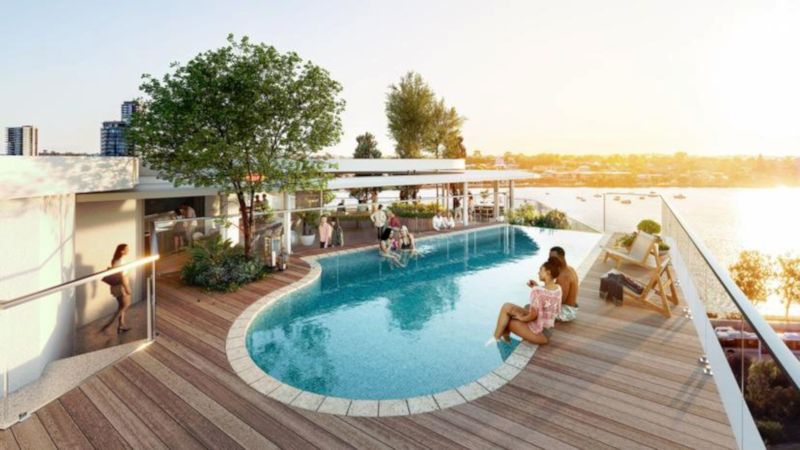
“You’ll see we have . . . rooftop swimming pool, kitchen and landscaped outdoor seating area in addition to a separate shelter orchard at the back.”
JDAP Deputy Presiding Member Lee O’Donohue said although there were variations that were not “necessarily palatable”, the positives of the development over-rode them.
“I’m quite happy that this proposal is heading in the right direction and will end up with a great result for Como,” JDAP presiding member Clayton Higham said.
The 2977sqm development was proposed over three separate lots 350m north of the Canning Bridge Railway Station.
Plans included a basement level, 134 occupier car bays, 16 visitor car bays, 14 motorcycle or scooter bays, 117 occupier bicycle bays and 15 visitor bicycle bays.
Communal amenities and a swimming pool were proposed for the eighth floor, and edible plants and a communal garden were planned for the first floor.
The city’s design review panel supported the developer’s strategy to deliver a “compact and affordable typology” in this location but held concerns.
“The extent of compromise evident in occupant amenity signals a design that does not yet achieve a level of quality consistent with the discretion in height being sought,” its report said.
“The proposed nine-storey built form, together with the inadequate building separation and visual privacy setbacks across all building floors, represents an overdevelopment of the site.”
The Canning Bridge activity centre plan allows buildings up to 26m tall, but the proposed complex would be 29.18m.
“The additional building heights would contribute to an unacceptable building bulk and overshadowing impact on the desired streetscape and neighbouring properties,” the city’s DRP report said.
The developer also wanted to use the nearby street for visitor parking.
“The proposed 11 on-street parking bays for visitors would create a streetscape dominated by street parking,” the city’s DRP report said.
Como resident and UWA Urban Planning graduate Matt Brice wrote in a submission to JDAP panel members WA desperately needed housing, and this development would help make more properties available in a desirable location.
“If this State wants the population to grow to 3.5 million, as is the plan, how is that possible without developments like this?” he wrote.
“We will end up with a metropolitan area from Geraldton to Bunbury.
“Please think about all the people that this development will benefit instead of the minor issues stated in the report from the responsible authority, which at the end of the day do not matter.”