Passive House affordable senior housing project finally opens
LOS ANGELES: A Passive House affordable seniors housing project is now finally set to open.
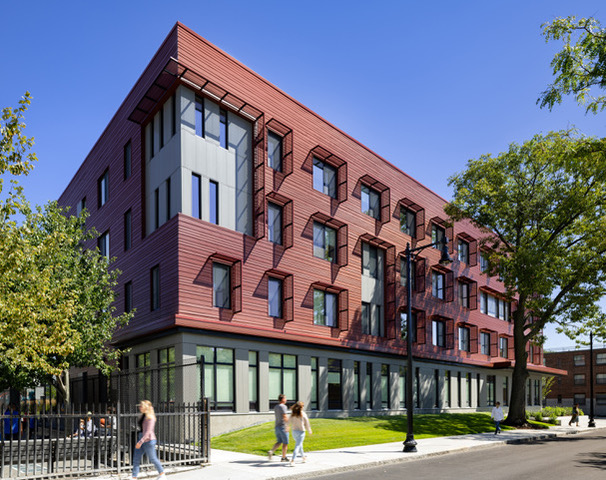
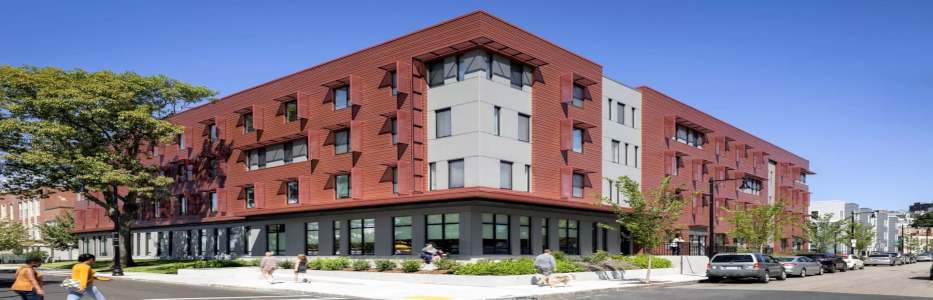
Work on Phase Three C of The Anne M. Lynch Homes at Old Colony, a 55-apartment midrise building in Boston that stands out for its use of Passive House design principles, was recently completed. Designed by The Architectural Team (TAT), the four-story structure was informed throughout by Passive House principles and standards.
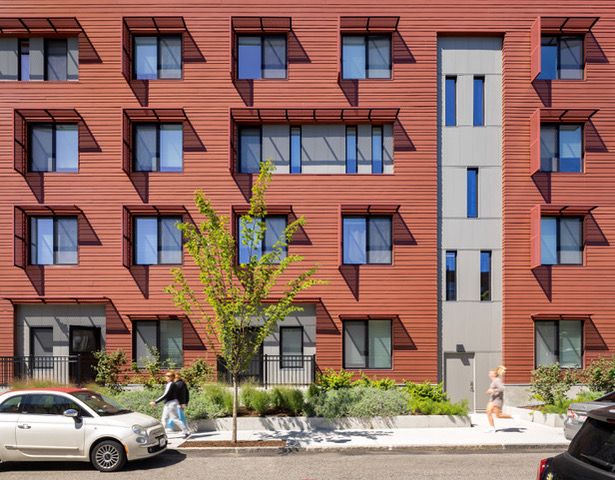
It features passive solar design and compact geometries to reduce thermal bridging, with a red and grey façade holding robust, heavily insulated walls. High-performance windows and a highly efficient HVAC split system provide a healthy and comfortable indoor environment for tenants by improving air quality and reducing contaminants such as mold. The project’s roof-mounted photovoltaic (PV) array also generates power to cut carbon emissions and boost sustainability and resiliency. A series of thermally broken metal fins act as solar shades bracketing many of the building’s window openings, reducing solar heat gain while also adding dynamic visual interest to the façade.
Passive House for affordable housing
“The Passive House approach is a game-changer for affordable and workforce housing projects, which can significantly benefit from the standard’s lower ongoing operating costs, healthier interior environments for residents, and a growing number of incentives from states and cities,” says Nate Thomas, CPHC, of TAT, a passive house project manager expert at the firm. “This is a critical and necessary step in facilitating more and better affordable apartments for vulnerable populations such as seniors, while reducing greenhouse gas emissions and the building’s ecological footprint.”
“Passive House buildings … are far more resilient than traditional apartment communities in severe weather conditions,” says architect and TAT principal Jay Szymanski, AIA, NCARB, LEED AP. “Due to very low air leakage and exceptional thermal performance, these developments maintain their user comfort for significantly longer in the event of power outages. As the number of severe storms and extreme weather events increases, this is another clear benefit of the Passive House approach—especially for seniors who are at much greater risk of negative health outcomes from extreme weather.”
The building is situated within a welcoming neighborhood of attractive midrise buildings and townhomes set within a walkable street grid and a variety of public open spaces. Earlier phases provided community assets and gathering hubs, including The Joseph M. Tierney Learning Center that offers educational services and health and wellness programs to support residents.