Over-50s are swapping rate race for career in travel
MELBOURNE: More people are changing careers later in life than ever – and jobs in hospitality and tourism are proving the most popular choice
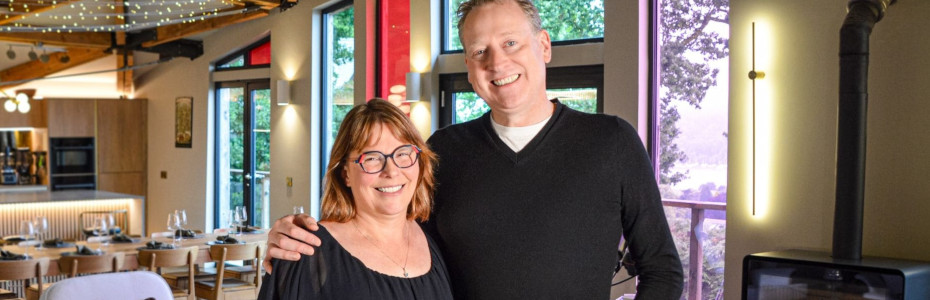
When 55-year-old Hayley Hadfield found herself experiencing “classic corporate burnout” working as an estate agent, and her 54-year-old husband Dave was made redundant from his role as a pharmaceutical salesman, they decided to take a drastic step. They embarked on a major career change into travel and hospitality. Soon after, the empty-nesters moved from Manchester to their current home in Windermere, where they work as live-in hosts at luxury hotel Dome House.
“We often joke that we don’t really have weekends or Christmases now, but we do have a life,” Dave says. “Yes, we work from 6am to 11pm when we have guests at the hotel, but hospitality is a more fulfilling role for people like us than being stuck at a desk.”
As the sole staff at the five-bedroom property, the Hadfields get to chat to guests from all over the world: “Lakes walkers; curious Chinese visitors here to visit Beatrix Potter’s house [Hill Top, now a National Trust property],” Dave explains.
“They always enjoy our full Cumbrian breakfasts, too,” Hayley adds.
The Hadfields are not alone. New data show that travel and tourism is the most popular sector for those seeking a career change after the age of 50. In its August 2026 report, easyJet said that the number of its cabin crew aged over 50 has increased by 127 per cent since 2022, with over-50s now making up 12 per cent of its cabin crew and the number aged over 60 having almost quadrupled (largely thanks to its “Returnship” scheme, designed to encourage over-50s to apply for cabin crew roles).
Similarly, in 2024 hotel group Hilton launched a recruitment drive for over-50s to fill 400 vacancies across its UK hotels. Hilton’s research found that a desire to travel and fatigue with office-based work were among the factors prompting older staff to change their working patterns, with hospitality appealing because of its flexibility, sociable nature and contrast to the staid desk jobs that dominate many Britons’ midlives.
Of course, moving from a corporate career to one in hospitality can include a substantial pay cut. According to 2025 figures from the Office for National Statistics (ONS), professional occupations pulled in an average wage of £56,700, while average earnings in service occupations – a category that includes much of hospitality – hovered at around just £27,200.
“To paraphrase Del Boy, I won’t be a millionaire by Christmas,” laughs 70-year-old David Moëd, who is winding down his job in accountancy to become a later-life digital nomad, subsidising his own travels by selling bespoke holiday packages. “But the travel industry brings me purpose, connection and a reason to keep pushing myself,” he explains. “In fact, I see this as the antidote to retiring from life.”
Lisa Francesca Nand, 52, is a career changer and co-founder of The Latitude Collective, which helps individuals, including Moëd, set up as independent travel agents.
“We’re seeing a real appetite among the over-50s to find new ways of earning, and travel makes a lot of sense,” she says. “Some are finding it harder to get back into conventional employment, others simply don’t want a rigid nine-to-five, but many still want or need to earn.”
She continues: “At the same time, this is a generation that wants to travel. They’re often already the person researching the hotel, organising the family holiday, going on the business trip and telling their friends where to go.”
In easyJet’s report, nearly four in five older travel career switchers (79 per cent) said they now saw their age as an asset rather than a barrier in the workplace, while 76 per cent said changing careers had renewed their excitement about working into their 50s, 60s and beyond.
Flexibility was the most commonly cited attraction of a new career, at 41 per cent, followed by greater job satisfaction or fulfilment (38 per cent) and new experiences (32 per cent).
Former police constable and steelworker Martin Warren, 56, works for insurer True Traveller and finds “pacifying people” – something he mastered during his copper days – a particularly helpful ability. “It’s a useful skill, both as a police constable on the beat and when you’re dealing with worried people with travel insurance claims,” he explains. “It’s about being able to focus and think clearly about what the person in front of you needs.”
Following a divorce, Warren embarked on an extended journey through India, Nepal, Tibet, Vietnam and Laos, and fell for the excitement and possibility of travel. His theory is that Covid left people cooped up at home, googling images of far-flung places online and dreaming about the destinations they couldn’t visit.
For some midlifers, he believes, that pent-up desire to travel translated into a determination to make travel a bigger part of their lives once restrictions were lifted. A bid to find a better version of oneself, in a way.
“Travel gives you excitement, access to other cultures and a welcome perspective on people’s lives, and moans, back home,” he says.
Dave Hadfield, for his part, believes that hospitality careers are a good fit for over-50s because, with greater life experience, many of us become better at reading people and anticipating what they want. “The shy guests who don’t want to talk, the gregarious extended families,” he laughs, “we get them all chatting away in the end!”
EasyJet says its research has found that adults who made a career change after 50 “reported an improvement in overall happiness”, with 71 per cent seeing “increased confidence” – but, according to Hayley, there’s another perk which she doesn’t often hear mentioned: popularity.
“It’s funny how many people come out of the woodwork when you run a hotel that sometimes has vacant bedrooms: friends, family, grown-up sons,” she laughs. “We suddenly feel very popular these days!”