Nonprofit now set to build permanent supportive housing
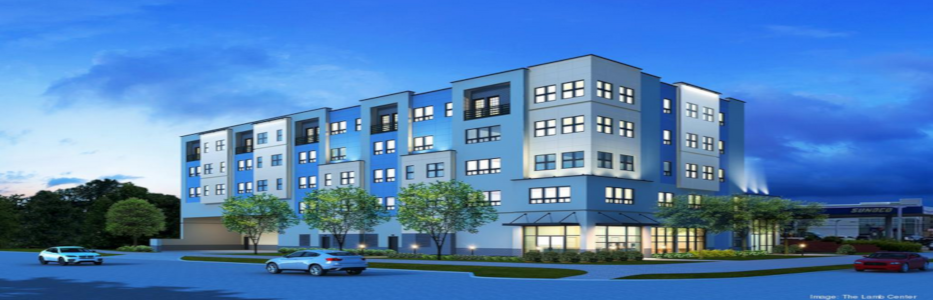
LOS ANGELES: A not-for-profit is preparing to create a permanent supportive housing community in the city centre.
A faith-based Fairfax city nonprofit has purchased an old motel with plans to turn it into affordable housing for people facing chronic homelessness, along with an accompanying employment center that’s looking for partnerships with regional businesses.
The Lamb Center, a multiservice, daytime homeless shelter, acquired the Hy-Way Motel at 9640 Fairfax Blvd. on Jan. 17 for $2.25 million. In a joint venture with Alexandria-based nonprofit developer Wesley Housing, pending financial contributions from every level of government, the center wants to build a 5-story building there, comprising 54 efficiency units of what’s called “permanent supportive housing.” That designation means it’ll also provide onsite, professional case management services to help residents — largely disabled and elderly individuals, Tara Ruszkowski, the Lamb Center’s executive director, said in an interview — tackle their underlying challenges and stay housed.
It’s a relatively rare kind of affordable housing, particularly at such a scale, aimed at one of the most vulnerable subsets of the region’s population. The federal subsidies the project is applying for would fix the rents at 50% of the area median income. But in practice, Ruszkowski believes the new apartments would house people making no more than 15% of the AMI. Kamilah McAfee, Wesley’s president and CEO, said in an interview she believes it’ll be the largest single permanent supportive project in Northern Virginia.
Usually when you hear about affordable housing, it’s targeting household with more moderately low incomes. People with extremely low incomes, on the cusp of homeless, have vanishingly few realistic options in the region. In 2021, the entire region added only 186 affordable units targeting households earning less than 30% of the AMI, according to data from the Housing Association of Nonprofit Developers. Ruszkowski said she expects the need will become more acute as pandemic-era resources and protections, including eviction moratoria and rent stabilization laws, run out.
“These folks really want to work,” Ruszkowski said. The Lamb Center’s job training program and dedicated jobs center on the new apartment building’s first floor, in addition to a variety of other case management services, would help them do so.
A few years ago, together with Fairfax city and Fairfax County, the Lamb Center launched programs that help its clients — the center calls them guests — land local government jobs maintaining parks and streams. The center has also had some ad hoc success helping people find private sector work, such as with Target, Chick-fil-A and Merrifield Garden Center, Ruszkowski said. It now wants to expand and formalize employment partnerships with more local companies, ranging from groundskeeping and landscaping to retail and construction, and potentially even more technical fields.
Residents of the center’s new housing would sign a lease and pay rent in the amount of 30% of their income, with a $50 monthly minimum, Ruszkowski said. Tenants may stay as long as they want or need, she added, though they could be evicted for criminal activity, damaging the property or other lease infractions.
The project represents a marked expansion of the Lamb Center’s functions. The center, supported by churches, businesses and other groups, already has a facility on Campbell Drive, just up the street, where it’ll continue to run a shelter during daytime hours. But six years ago, the organization’s leadership asked itself, “What is the greatest unmet need of the people that we are serving? And of course, the answer is housing,” Ruszkowski said.
Recommended
Permanent supportive housing is relatively uncommon in part because it’s expensive to build, and especially to operate, requiring subsidies from every level of government to be financially sustainable. Rising interest rates and inflation only compound the difficulties getting such projects to pencil out.
The project will cost an estimated $29 million to build and begin operating, Ruszkowski said. It’s secured $1.9 million from December’s federal omnibus appropriations bill, according to McAfee, but still requires a patchwork of additional subsidies, among them low-interest loans, also known as gap financing, from Fairfax city and Fairfax County; an allocation of “project-based” federal housing vouchers and new American Rescue Plan federal dollars, which are both administered by the county; and federal low-income housing tax credits and monies from the state and federal housing trust funds, administered by the state.
“Blending all of those capital resources, along with the operating subsidy with the vouchers, is how we’re able to hit those low very low-income targets,” McAfee said.
The Fairfax City Council approved the project’s special-use permit Dec. 13. McAfee said she hopes the city and county will approve local gap financing in the next couple months, because the project will need those resources locked down to be competitive in its tax credit application to the state in March.