New development now set to have LGBTQ seniors
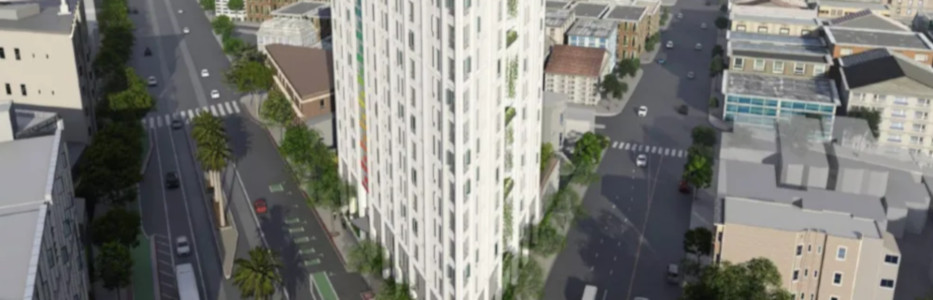
LOS ANGELES: A new development on a regeneration site is set to house a LGBTQ seniors community.
As a new affordable housing project affirming of LGBTQ seniors eyes a 2029 opening date in San Francisco’s Castro neighborhood, conversations are already underway on how to ensure a majority of its residents are queer and transgender older adults.
Due to nondiscrimination policies, any senior regardless of their sexual orientation or gender identity who meets the various eligibility requirements covering the 185 apartments the building at 1939 Market Street will deliver will be able to apply for them. It is similar to how any senior who met the criteria to apply for the first such units meant for LGBTQ elders built nearby at 55 and 95 Laguna Street could do so.
It prompted city officials and sponsors of the projects to develop plans on how to market the lotteries for those units to LGBTQ seniors so a large number of those eligible did so. Criteria such as giving preference to applicants who lived nearby were also imposed as a way to help see more of those 119 affordable apartments house queer and transgender older adults.
According to local officials, those efforts were largely successful and resulted in roughly half of the units in the two buildings going to LGBTQ seniors. With the city’s LGBTQ population rapidly aging, and many older queer and trans residents finding it a challenge to afford San Francisco’s high housing costs, the need is great to provide them affordable options to remain housed.
It prompted gay Board of Supervisors President Rafael Mandelman, who represents District 8 where the new housing development will be built, to express his concerns about seeing 1939 Market Street be filled predominantly with LGBTQ residents during a hearing before the supervisors’ budget and finance committee Wednesday. He had worked with the former Breed mayoral administration to see that the city bought the triangular parcel at the intersection of Market and Duboce Avenue in 2020 for $12 million from the Sheet Metal Workers Local 104.
The hearing’s agendized focus was on seeing the board accept a $47.6 million grant awarded in December to the project by the California Strategic Growth Council. Of those funds, $35 million is designated toward constructing the multi-story building of housing above ground floor commercial space, with the remaining money used for various street infrastructure upgrades across the city such as bikeways and rapid bus transit improvements.
The three-member budget committee, which includes gay District 6 Supervisor Matt Dorsey, voted unanimously to recommend the full board approve accepting the state funding. The supervisors are expected to do so later this month.
Mandelman co-sponsored the resolution along with the office of Mayor Daniel Lurie. He used the committee vote on it to raise his concerns about who will eventually end up residing in the building and that they are “actually queer.”
But he also acknowledged the complications local leaders face in ensuring that happens. Achieving that goal is further complicated by the fact that the units will be designated for different populations of seniors, from veterans and those living with HIV to those formerly homeless or at risk of losing their housing.
“On the queer of it all, this is complicated,” noted Mandelman, who will be termed off the board in early January. “It is a complicated conversation for us to have in this chamber. We cannot legally, because of funding sources we are using, create queer senior housing.”
He added that the housing at the 55 and 95 Laguna sites “is not exclusively queer. It is, I believe, majority queer. And that, frankly, was achieved through a lot of hard work.”
Overseeing those efforts were Mercy Housing California and nonprofit LGBTQ service provider Openhouse, along with the Mayor’s Office of Housing and Community Development. All three entities are once again working on the 1939 Market Street building, as the city selected Mercy and Openhouse to oversee its development.
Goal to have LGBTQ seniors qualify
Not having LGBTQ seniors comprise the bulk of its residents would be a “failure outcome” on the part of Mercy and Openhouse, contended Mandelman.
Representatives for the two organizations, along with a staffer from MOHCD assigned to the project, acknowledged the challenges they face in ensuring that does not happen.
MOHCD senior project manager Matt Graves noted that Openhouse “is looking at having a dedicated staff person look at the lease up of the building and also peer outreach members for this target community doing outreach to the community so they know who needs housing the most.”
Morey Riordan, a transgender man who took over as executive director of Openhouse last October, said he would like to hire at least two people to work on the leasing issues around the new building and recruit upward of 20 community members to volunteer with assisting LGBTQ seniors to apply for the units. To do so, he is aiming to raise $250,000 in order to roll out the efforts during Pride Month in June 2027.
“I am not going to sugarcoat it. It is going to be hard work,” stressed Riordan. “It is an 18-month plan. We need 18 months if we are going to achieve the goal we want. We need boots on the ground.”
Its job is made all the more difficult by the fact that certain units will be set aside to target different groups of seniors. Nine are to go specifically to seniors living with HIV, with 75 for extremely low-income seniors aged 62 or older via what is known as the Senior Operating Subsidies (SOS) program.
Another 40 units are to go to homeless senior households via what is known as the Local Operating Subsidy (LOSP) Program. Different agencies and city departments will be referring their clients eligible for those units to apply to live in them.
Mercy senior project manager Sean Wils noted that Openhouse is also looking at how it can play a larger role in seeing LGBTQ seniors apply for the set aside units under the various programs.
“Openhouse is exploring becoming an access point to ensure folks we are getting are from the LGBTQ-plus community,” said Wils, particularly for the LOSP program units.
Riordan said he is talking to the city’s LGBTQ community center about partnering with it on being an access point. He also noted that talks are already underway with officials at the city’s Veterans Affairs hospital to see that LGBTQ vets apply for the 55 units being set aside via the Veterans Affairs Supportive Housing (VASH) program.
“It has been pretty gratifying to hear how confident they are that most of those units will go to LGBTQ folks based on the need they are seeing,” said Riordan about the response from local VA officials.
The total cost to build the new housing is pegged at $116 million, and Mercy must still secure roughly $100 million before ground can be broken. As the Bay Area Reporter reported in December, this spring Mercy plans to apply for 4% low-income housing tax credits administered by the California Tax Credit Allocation Committee (CTCAC) and the California Debt Limit Allocation Committee (CDLAC).
The state committees will announce their decisions August 18. If awarded the tax credits, Mercy will be required to start construction within 180 days, which happens to coincide with Valentine’s Day on February 14, 2027.
Should that occur, construction is expected to wrap up in February 2029. The marketing and leasing for the units would begin in July 2028 to have the selected residents ready to move in that winter.
“It is all hands on deck,” Riordan said in terms of putting the 18-month plan together and in operation to ensure the goal of having the building house mostly LGBTQ seniors is met.
Mandelman said he is “encouraged” by the preparations already underway and hopeful it will result in the desired outcome.
“I think the outreach work Openhouse is talking about could help ensure the (various subsidy program) units have enough queer people going into those lotteries that we don’t end up with disappointing outcomes,” he said.