New affordable homes community set for seniors, vets, disabled
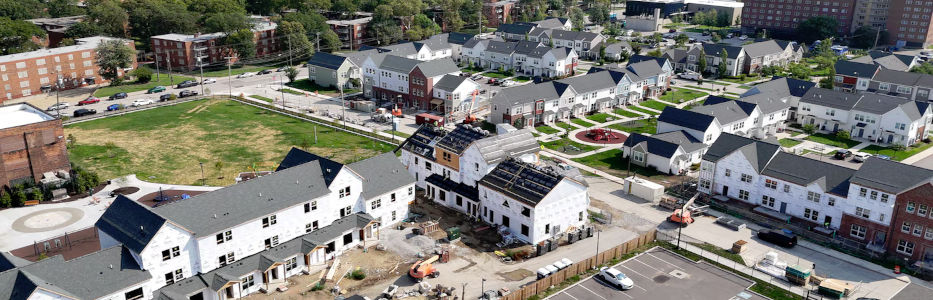
LOS ANGELES: A new multigenerational, affordable housing community is being created to serve seniors, veterans and the disability sector.
Cuyahoga County Council, on Tuesday, approved $5.1 million in loans to help increase the area’s affordable housing supply, specifically for seniors, homeless veterans and adults with disabilities.
The loans are to be spread across nine projects, helping create 557 new housing units and repair and rehabilitate another 147 units, keeping them in the market, Tony Scott, the county’s director of Housing and Community Development previously explained in a presentation to council members.
The loans, which are supported by federal funding, will be forgiven after 20 years if the housing continues to meet affordability requirements, Scott said. He defined affordable as housing priced for households earning no more than 60% of the area median income — meaning rents are capped so that families at that income level spend no more than about 30% of their earnings on housing.
Council unanimously approved the loans at Tuesday’s meeting. Councilman Michael Houser, who chairs the Community Development and Housing Committee where the item was first discussed, summarized simply that it is a “great project all across Cuyahoga County.”
The nine housing projects include:
- $1 million to Cleveland West Veterans Housing L.P for the development of 62 multi-family and permanent supportive housing units for homeless veterans at 3311 West 73rd St., Cleveland
- $500,000 to Hough Senior Independent Living L.P. for the development of 55 permanent supportive housing units for seniors at 8910 Hough Ave., Cleveland.
- $600,000 to Cleveland Heights Senior Housing Limited Partnership for the development of 71 senior housing units at 2728 Lancashire Road, Cleveland Heights.
- $500,000 to Depot on Detroit L.P. for the development of 60 multi-family housing units at 10300 Detroit Ave., Cleveland.
- $500,000 to Gateway 66 Limited Partnership for the development of 80 multi-family housing units at 1521 E. 66th St., Cleveland.
- $500,000 to Fairfax Innovation Square 2, L.P for the development of 67 multi-family housing units at 2287 East 103rd St., Cleveland.
- $500,000 to Kirby Manor Senior Housing Limited Partnership for rehabilitation of 147 units of senior housing at 11500 Detroit Ave., Cleveland.
- $500,000 to Midtown Lofts LLC for the development of 120 units of multi-family housing at 3300 Payne Ave., Cleveland.
- $500,000 to Walton Senior LLC for the development of 52 units of senior housing at 3577 Walton Ave., Cleveland.
Cuyahoga County Executive Chris Ronayne announced the loan program in July, noting a total $5.5 million in federal HOME Investment Partnership Act funds to provide gap financing for local housing projects. The dollar amount includes a tenth project supported by a grant, which did not require council approval, for the North Coast Community Housing Development to buy and rehabilitate single-family homes for disabled adults.
The proposal followed the results of a housing study, which found wide disparities in housing affordability based on location within the county. While housing was considered affordable for median-income earners in a majority of the county’s neighborhoods, the study showed that lower-income residents were struggling to afford housing in Cleveland and some of the affluent outer-ring suburbs like Solon, North Royalton and Westlake.
The loan program aims to address that.
“Everyone deserves a safe, affordable place to call home,” Ronayne told cleveland.com and The Plain Dealer in an emailed statement. “These loans make it possible for families to build roots, and for seniors to age in the communities they’ve long cherished.”
The loans come as the county’s Division of Senior and Adult Services (DSAS) is reporting record numbers of older adults flooding the county’s senior support hotline in search of help meeting their basic needs, especially with food, rent and utilities. Investigations into abuse and neglect, especially senior self-neglect amid the financial pressures, are also increasing – and might get worse following changes to Medicare, Medicaid and food benefits, officials worry.
With nearly 30% of county residents projected to be over the age of 60 by 2030, DSAS Director Natasha Pietrocola told cleveland.com and The Plain Dealer that she believes the situation is reaching a tipping point and demands immediate action.
“I just think it’s kind of a cycle that’ll just get perpetuated if there’s no resolution to some of this stuff,” she said. “We know people are living longer. It’s not like it’s some new thing that just occurred recently. We’ve had time to prepare.”