Multigenerational housing project to include senior health care services
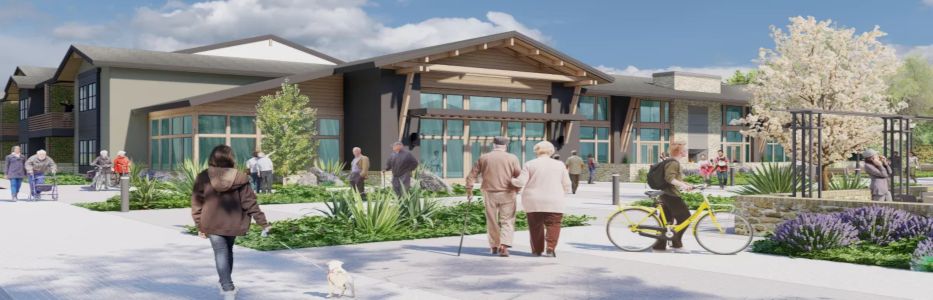
LOS ANGELES: A multigenerational housing project is set to include a dedicated seniors health care services unit.
As plans for the Ramona Intergenerational Community Campus (RICC) begin to unfold, design elements show there will be space for senior health care services but communal senior lunches are still in flux.
An architect shared details about the RICC, conceptualized more than 25 years ago, in a joint meeting with the Ramona Design Review Board and the Ramona Town Center Subcommittee of the Ramona Community Planning Group on March 30.
The RICC is intended to incorporate services and activities for all ages on an 8-acre site north of Main Street between 12th and 13th streets near Ramona Community Library. Designs also call for a 100-unit affordable senior complex, Paseo Norte Apartments; a senior center, PACE medical clinic and a Ramona Community Resource Center.
Also envisioned are 4 acres of active and passive open space, which could include a Santa Maria Creek multi-use trail, said John Sugden, project manager for the San Diego-based developer, Wakeland Housing and Development Corp.
Construction is estimated to begin at the end of 2025 and be completed about two years later at the end of 2027, Sugden said.
In his presentation, Sugden said Paseo Norte Apartments would include 85 one-bedroom units and 15 two-bedroom units. The two-story building would also have a community room, laundry facilities, a common kitchen area, and central courtyard, he said.
Also being incorporated in the building is a 2,000- to 3,000-square-foot senior center on the first floor and a comparably sized community room on the second floor.
The apartments are designated as “senior group housing” because of the common standard kitchen, but each apartment unit is also designed with its own kitchen, Sugden said.
Up until now, the community was expecting an RICC facility to serve lunches to seniors, said Dawn Perfect, a member of the Ramona Town Center Subcommittee of the Ramona Community Planning Group.
Perfect said the current RICC design does not include a congregate lunch dining room comparable to the dining room at the Ramona Senior Center. Advocates of the RICC had wanted a new senior center to provide senior meal services, she said.
“The facility being planned now doesn’t meet the needs of the Ramona Senior Center as the program is today,” Perfect told Sugden.
Sugden said current plans may not accommodate a large commercial kitchen for the senior center, but emphasized that the building’s design is being altered due to environmental issues. The possibility remains open that senior lunches could be served at the building’s senior center, he said.
“Nothing is set in stone,” Sugden said. “They (the current Ramona Senior Center) would have to agree to want to use the space that we end up with. Until the dust settles on the environmental requirements and we have a chance to design around what’s possible, I don’t know who is going to be the end user.”
Presenters also discussed the St. Paul’s PACE medical clinic. PACE, which stands for program of all-inclusive care for the elderly, is designed for seniors ages 55 years and older who have chronic medical conditions and are struggling to live at home independently, a PACE website states.
PACE provides medical care to mostly frail elderly people as a complement to Medicare and Medical, said Peter Armstrong, Wakeland Housing and Development’s vice president of real estate development. Services by nurses and other medical professionals would include prescribing medication and offering physical therapy, Armstrong said.
“Instead of having a primary care referral to a specialist, seniors would go to PACE,” Armstrong said. “Our project is focused on independent living. Seniors can live independently in apartments and can get complementary health services. It’s a different way of accessing medical care.”
Sugden said the affordable senior complex would be open to seniors age 55 and older who earn between 15 percent and up to 60 percent of the area median income.
Armstrong added that section 8 voucher programs may be available to seniors with up to 50 percent of the area median income. The annual median income is roughly $90,000 for a household of four, so smaller households of one to two people may qualify with an annual income of $60,000 or below, Armstrong said.
Detailed plans about Paseo Norte Apartments are expected to be available after the California Environmental Quality Act (CEQA) requirements are completed in late summer or early fall, Sugden said. Planners are addressing environmental issues such as impacts to vernal pools and threatened fairy shrimp on site, Sugden said. This could involve buying credits to offset environmental disruptions or replanting in open space, he said.
Since the review of Paseo Norte Apartments was a joint presentation to the Ramona Design Review Board and the Ramona Town Center Subcommittee, two votes were taken on the item.
The Ramona Design Review Board members unanimously voted to table any action on the project until more information is provided.
The Ramona Town Center Subcommittee voted unanimously to request that Paseo Norte Apartments proponents return when plans are more fully developed. The vote included a request to also have the plans reviewed by the Ramona Community Planning Group’s Trails & Transportation Subcommittee and the Parks and Recreation Subcommittee.