Luxury retirement options now being curated at upscale resort
LOS ANGELES: A plethora of new entrants is now starting to crowd the high end of the luxury retirement option resort market.
A new Queenstown retirement village is offering five-star living in multimillion-dollar apartments, but won’t solve a seniors’ housing crisis.
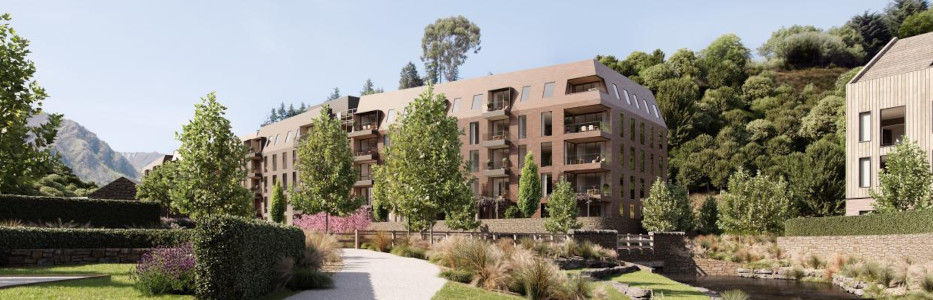
Northbrook Arrowtown was launched in early May promising to provide “a masterpiece in refined later living” amidst the luxury hospitality precinct at Ayrburn.
Ayrburn and Northbrook were Winton company developments, spearheaded by Chris Meehan. The retirement village would be the fifth Northbrook site.
The Arrowtown precinct would comprise 168 residences, penthouse options and 26 care suites, costing between $1.4 million and $8.5m.
Residents would have access to a health club with pool, hydrotherapy spa, gym, yoga and associated facilities, a salon, cinema and library, cafe and a round-the-clock concierge.
They would pay a weekly fee of about $450 for a two-bedroom unit to cover the amenities, repairs, maintenance, and rates.
Construction was to commence in 2025 with the first residents expected by the end of 2027 and already up to seven units were being signed up, Meehan said.
“The market loves it.
“It’s a big decision and we’ve only been going for a week. It will take a while for people to make a decision of that magnitude but we’re confident we’ll sell the first stage of 46 homes out fairly quickly,” he said.
However, Queenstown was in the midst of a housing crisis and Northbrook would not be providing any solutions for the people on the waiting list for homes at the Queenstown Lakes Community Housing Trust.
Trust chief executive Julie Scott said about 4% of the waiting list for affordable homes in the district were over-65s – currently 45 households.
Rental property in Queenstown started at about $500 per week, and was simply unaffordable for many people, she said.
“A lot have been working very happily all their lives and through unfortunate circumstances have found themselves in a position where they have no income except the pension scheme.”
The trust regularly heard distressing stories from older people who were forced to leave town because it had become impossible to find affordable housing.
Infometrics figures showed that in 2023 the proportion of people aged 65 and older was 11% of the district – considerably lower than the 16.5% across New Zealand.
Million-dollar retirement homes were not an option for most elderly people in Queenstown, Scott said.
The trust recently allocated six homes as rentals for senior housing at new development Tewa Banks, in Arrowtown, which was due for completion in October.
“When we called five out of the six they cried down the phone. It’s so emotional for them,” she said.
There were few other options in the region for Queenstown retirees that were not in the million-dollar range.
The Arrowtown Lifestyle Village had villas available from about $800,000 to almost $3m and had weekly fees of almost $200.
There were also homes in the Queenstown Country Club that ranged from $1m to $3m, and apartments and a care centre were coming on board at the venue.
Abbeyfield NZ chairman and Queenstown committee member Simon Hayes said he knew stories of elderly people sleeping in their children’s garages or in caravans.
“It’s fine in summer but not quite what it’s cracked up to be in winter,” he said.
“I would have thought there’s a crying need for more appropriate one-bedroom cottages or similar.”
The costs of land and construction in Queenstown were amongst the highest in the country, he said.
“Unless you can find an investor who wants to build some flats and get a 2% return, when they could get a 6 or 7% return in the normal market, it’s going to be very difficult to accommodate the needs of these people.”
Meehan said developments such as Northbrook helped the market because when local people moved, their homes became available to others.
“To my mind any housing supply is good in such a constrained market,” he said.
Hayes said Abbeyfield NZ, a registered charity which operated 14 houses across New Zealand, provided up to 14 rooms for individuals and communal dining at its sites.
Residents paid a rent of about $500 which included food and bills, and there was no capital contribution required.
The Queenstown home had 12 rooms and a high occupancy level.
Hayes said trustees were on the lookout for suitable venues for another home and there were groups actively trying to develop Abbeyfield in nearby Wānaka and Alexandra.
A recently released report by Sapere Research, commissioned by Te Whatu Ora/Health New Zealand, found the elderly housing sector could be short of 12,000 beds by 2032.