Intergenerational city of wood now being readied to rise
LOS ANGELES: A group of boomer architects are behind the creation of an intergenerational city made up of wood.
Where else if not Sweden, a country where almost 70 per cent of its land area is covered in forest, would you expect the world’s largest urban construction project of wood ever attempted?
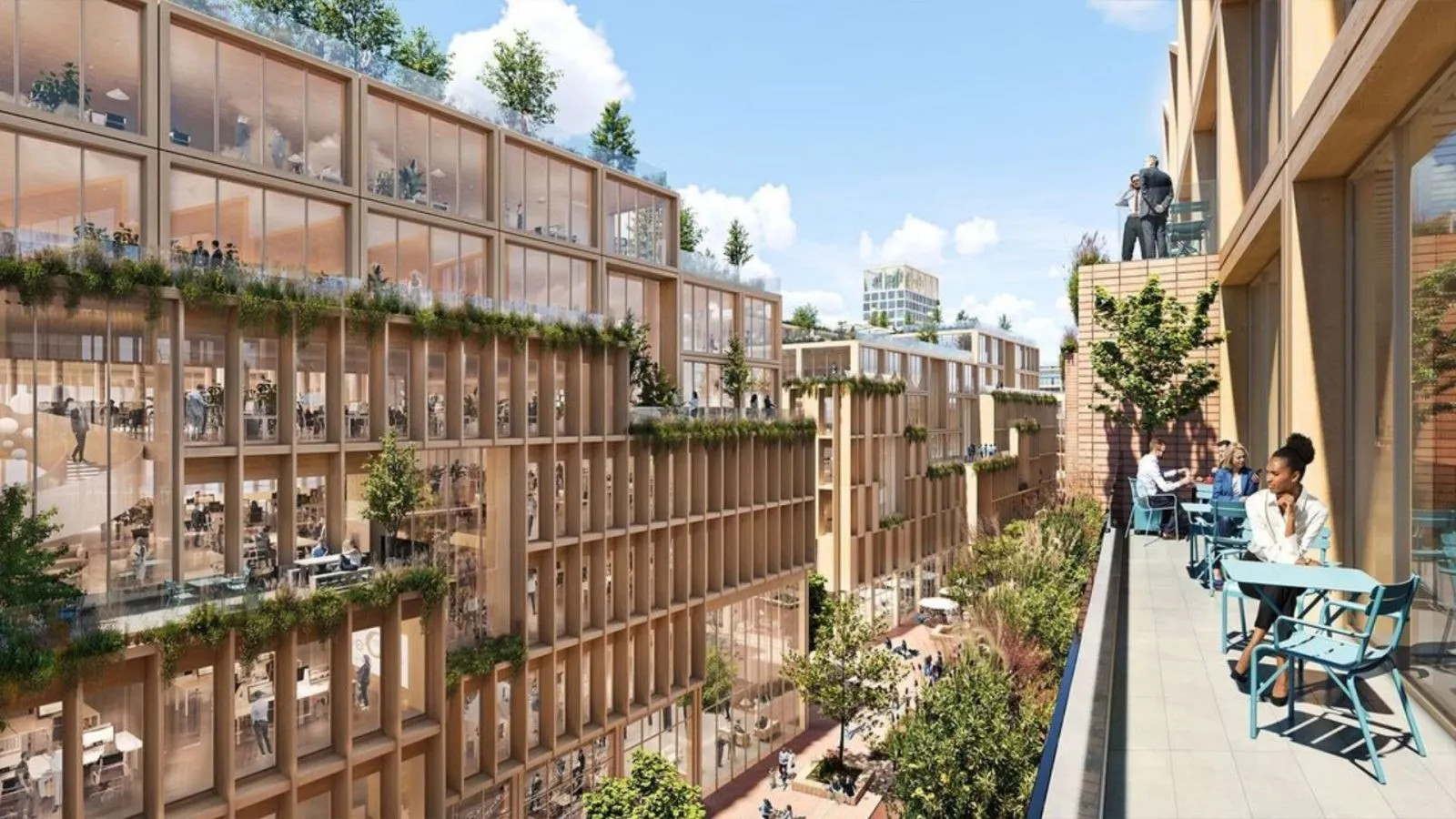
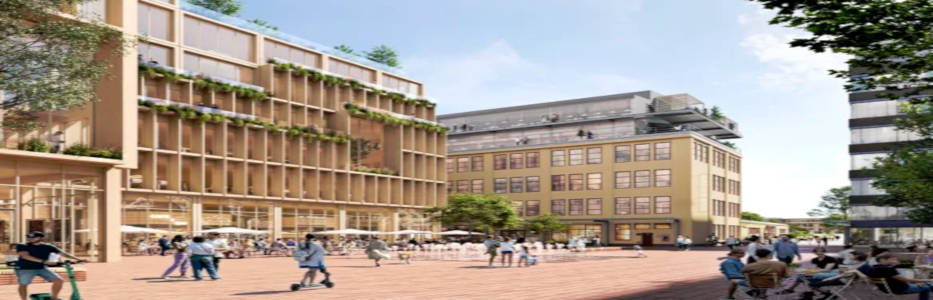
A groundbreaking new development in the southern suburbs of Stockholm, the nation’s capital, is about to become a beacon of wooden architecture on a global scale. You’ll only need to stroll about an hour through the cobbled streets, over the bridges where Lake Malaren meets the Baltic Sea, to see a sprawling metropolis of 250,000 square metres – or 25 blocks – encompassing 7000 office spaces, 2000 homes, as well as restaurants and shops.
Atrium Ljungberg, the urban development company behind the project, envisions the project in the vibrant neighbourhood of Sickla as a “five-minute city” where workplaces, homes, leisure facilities, and amenities are all within a short walk of one another.
The project was designed by architecture firms White Arkitekter and Henning Larsen. It was a Henning Larsen design, working with collaborators Architectus and Arup, that was selected earlier this year to transform the Canberra Theatre Centre.
Construction of the Sickla site is slated to begin in 2025 with the first buildings finished by 2027. It will take a decade to complete the project at a cost of about 12 billion Swedish krona ($1.6 billion).
“We sought to create an urban environment infused with the serenity of a forest, resulting in a dense, open space that bears the distinctively minimalistic and functional aesthetic of a Scandinavian design,” Annica Anas, the chief executive of Atrium Ljungberg, said.
For over a century, Sweden had banned wooden homes above two storeys high.
Timber has re-emerged as a sustainable alternative to traditional construction materials such as concrete and steel across Europe, North America, Asia and Australia recently amid a major environmental push. The real estate industry is regarded as crucial in the green transition, as buildings account for as much as 40 per cent of the world’s carbon emissions.
Throughout the Nordic country, an increasing number of high-rise structures is being constructed using wood, as part of the nation’s commitment to achieving carbon neutrality by 2045.
But while tall wooden buildings hold symbolic importance, the construction of wooden houses and office blocks is likely to contribute to lower environmental and climate impacts.
Tomas Alsmarker, head of innovation at Swedish Wood, said the country had seen a huge change in building materials over the past five years.
Sweden hopes to lead innovation in timber architecture, with 70 per cent of its land covered in forests.
Sweden hopes to lead innovation in timber architecture, with 70 per cent of its land covered in forests. For over a century, Sweden banned wooden homes above two storeys high. Now it is the material of choice in the country with the largest percentage of forestland in Europe.
“For all buildings up to eight storeys high, the question is not whether it’s possible to do it in wood. You should ask why we should not do it in wood.”
The project will, as existing wooden skyscrapers do, employ large prefabricated sections made from what is called “engineered timber”, a composite in which layers of wood are laminated together in specific ways. The wood grains in each layer are aligned to provide individual components of the building – such as floors, walls, cross braces and beams – with extremely high levels of strength.
While some have raised concerns about the potential fire risks posed, designers argue that engineered timber burns at a relatively slow and predictable rate, making it safer than many conventional steel structures.
There also remains some disagreement over whether forests are more effective in reducing carbon emissions when left alone or when they are managed sustainably and harvested for wood production.
Several studies have shown that substituting mass timber for steel and concrete can decrease greenhouse gas emissions by up to 26.5 per cent. But using more wood also risks outraging environmentalists, who argue it will have further negative impacts on forests, which store carbon dioxide and sustain the livelihoods of many communities.
Scientists say carbon sequestration potential makes wooden buildings a valuable tool in combating climate change, while wooden structures also offer better indoor air quality and can be built with significantly lower carbon emissions compared with conventional materials. As a natural thermal insulator, timber performs 15 times better than concrete and 400 times better than steel.