City to build senior housing units for the middle-class
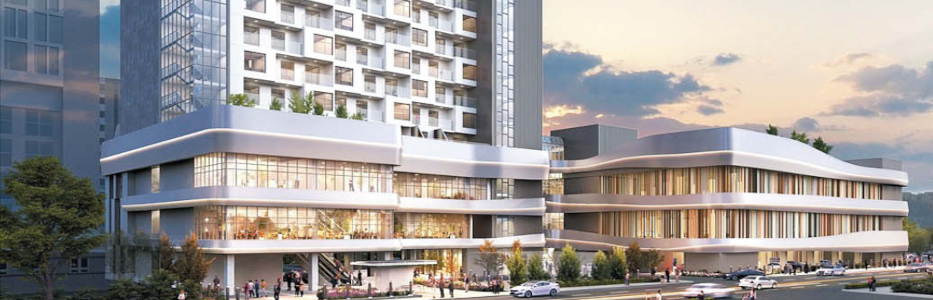
MELBOURNE: A city has said yes to building 12,000 senior housing units for its middle class citizens.
Seoul will establish around 12,000 units of Seoul-type senior housing for middle-class elderly residents. These are not just residential spaces but also provide meals, medical care, and leisure activities. Based on a dedicated area of 59㎡, the deposit is expected to be around 300 million Korean won with a monthly rent of approximately 1.1 million Korean won.
The Seoul Metropolitan Government announced on the 5th that it plans to supply approximately 12,000 units of Seoul-type senior housing by 2035, including sites such as the public parking lot near Gaewolsan Station in Gangseo-gu and the former Seocho Fire Station site in Seocho-gu. These will be divided into 8,500 units of senior welfare housing and 3,500 units of senior safety housing. A source from the Seoul Metropolitan Government stated, “Currently, senior housing is effectively divided into suburban silver towns located far from the city center and high-end silver towns costing tens of billions of won,” adding, “There is a significant shortage of housing suitable for middle-class seniors, who have the highest demand.”
The Seoul Metropolitan Government will first promote pilot projects centered around public sites, areas near subway stations, and sites linked to medical facilities. Approximately 800 units will be supplied by 2031 at the public parking lot near Gaewolsan Station in Gangseo-gu and the former Seocho Fire Station site in Seocho-gu. An additional 100 units will be added to areas targeted for revitalization around subway stations, such as Seongsinyewon University Station in Seongbuk-gu. Senior housing linked to medical facilities is planned for the site of Kangnam Cha Hospital. A source from the Seoul Metropolitan Government stated, “In addition to the announced sites, we are considering additional supplies in areas such as Gangnam-gu, Jongno-gu, and Eunpyeong-gu, with plans to proceed with projects in 8–10 autonomous districts.”
For Seoul-type senior housing with a dedicated area of 59㎡, the deposit is expected to be 300 million Korean won with a monthly rent of approximately 1.1 million Korean won, totaling around 2.9 million Korean won per month for two people. This is less burdensome compared to existing silver towns in the market. The city plans to further lower the barrier to entry by providing interest-free deposit support of up to 60 million Korean won for seniors without homeownership.
To vitalize private-sector supply, the Seoul Metropolitan Government will also provide various incentives. Considering recent difficulties in securing funding and acquiring sites within the city center, it will offer loans of up to 1 billion Korean won for land purchase costs. Interest on construction funds will be supported up to 2.4 billion Korean won, with an annual interest rate subsidy of up to 4 percentage points. The burden of public contributions will be reduced, and the scope of recognized donations will be expanded. If senior housing is included in urban redevelopment projects, the floor area ratio will be relaxed up to 200%, and building height restrictions will be eased up to 30 meters.
Experts point out that achieving the supply target could be challenging if senior housing fails to generate profits through operations. Park Jae-byeong, a representative of CareDoc, stated, “Senior towns have a structure where service costs such as meals and care continue to arise during the operational phase,” adding, “While expanding supply is important, it should be approached from the perspective of investing in extending the healthy lifespan of the elderly.”