Call for dry supportive housing concept to be expanded
MELBOURNE: Experts and people with lived experience say there aren’t enough types of housing for those who need it.
City councillors in Nanaimo have asked to renew their request to B.C.’s Ministry of Housing for a new supportive housing facility to be dry, meaning residents must abstain from consuming illicit drugs and alcohol.
At a special governance and priorities committee meeting Monday night, councillors heard from nearly a dozen speakers who spoke in favour of making the upcoming 50 new units at 250 Terminal Avenue dry, rather than low-barrier as is currently planned.
“I want to be clear, low-barrier housing is essential,” said Nanaimo Family Life Association’s director of shelters and guest services Erika Gagnon.
“But there is a gap.”
Gagnon and her colleague, case manager Jessica Wilson, spoke about the difficulties they face trying to shelter those in need who don’t use illicit drugs and alcohol, like newly homeless seniors who have never used illicit substances.
“Not everyone who is going through the crisis of being unhoused is affected by the disease of addiction,” Gagnon said.
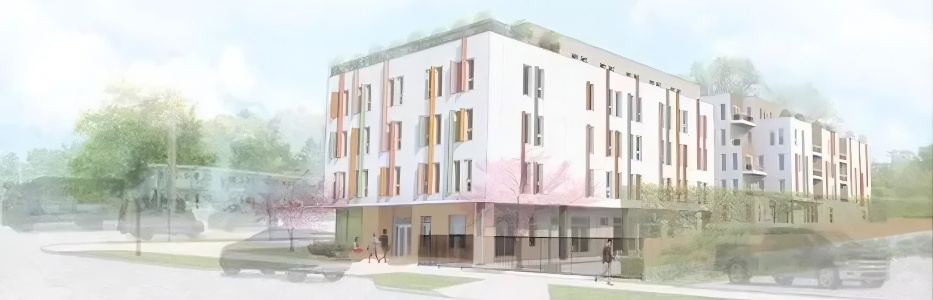
The meeting was part of a long-standing argument between the city and the province’s housing minister about units at Newcastle Place, which are currently planned to open by fall 2028.
Housing Minister Christine Boyle has told the city the request to make the facility a dry housing complex isn’t something B.C. Housing is considering.
“B.C. Housing uses the widely recognized housing first model, meaning we recognize the importance of getting people into housing and supports, in that housing that allows them to access health care and other supports with a harm reduction approach,” Boyle told CBC’s The Early Edition last summer.
At Monday’s meeting, Coun. Erin Hemmens said that as part of Nanaimo’s ongoing discussions with the housing minister, the city would send a package outlining evidence to support the need for dry housing.
Other speakers at the meeting included the deputy warden of the Nanaimo Correctional Centre, who spoke about how difficult it is to house people who finish at the Guthrie Therapeutic Community — a 48-bed intensive substance use and addiction treatment program.
One speaker shared his story of living in a low-barrier shelter one month after becoming sober, and the constant triggers he had to endure from other residents who were under the influence or openly drinking while chatting with him.
“Our current system is sending people who have just finished addiction treatment back into a place where substance use is prevalent,” said Charles Myerscough.
Kix Citton, executive director of the Nanaimo Brain Injury Society, explained how chaotic low-barrier shelters can be for people with cognitive difficulties.
“One [supportive housing] model cannot meet every need,” Citton said at the meeting.
“For people with brain injury, housing often needs to support routine, calm, predictability.”
Coun. Sheryl Armstrong, who put forward the motion to renew the city’s request, said she was specifically asking for the units at 250 Terminal Ave. because it was unclear if any more supportive housing units would be coming, given the province’s current economic reality.
“We know right now the government is trying to be fiscally responsible,” Armstrong said.
“And as we’ve all heard, continuum of care is very, very important.”