Best retirement housing design for Global Awards shortlisted
LOS ANGELES: The shortlist for the best retirement housing design has been declared.
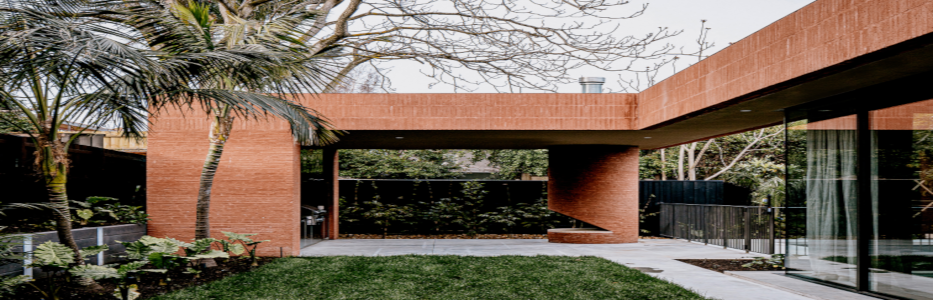
Over 250 designs have been considered by the awards secretariat. One of the finalists in this category is shown above.
Far from resembling the ubiquitous red brick home of the 1960s, the winners of Australia’s richest architectural awards have taken the mundane and made it magical, says the jury of top architects.
Winners of the Think Brick awards, which offer five prizes of $10,000, have used bricks and tiles in colours chosen to match the landscape: they are laid upside down and in new shapes and techniques.
Right angles are no longer obligatory either. Third-generation brickmaker Klynton Krause says nothing is square any more. “We’ve ended up making bricks that aren’t even 90 degrees,” he said.
Architects B.E Architecture won the $10,000 Horbury Hunt Residential Award for Anderson Road, a Melbourne home. It used Australian-made bricks in a soft-terracotta tone, with matching mortar, that were rumbled to create a worn and soft appearance. Custom-made curved bricks form a two-storey column.
“Brick is the hero here and the architects have mastered this with a beautiful, almost monolithic structure,” the jury said.
Bricks have come a long way since the 1960s, says Elizabeth McIntyre, the jury chair and chief executive of Think Brick, the Concrete Masonry Association of Australia and the Australian Roofing Tile Association. She loved the use of textured and curved facades, tiled roofs curving into walls and custom colours.
Brick is back, according to juror and award-winning Sydney-based architect William Smart.
“After a period of minimalism, where everything was white and painted, people are embracing brick,” he said.
“It’s an unpainted and durable material. You only have to look at brick buildings along motorways to realise it takes the city environment really well. It ages beautifully.”
Other winners included the arched Joyce Chapel Bridge in Melbourne, which the jury said was “stunning in its detail”.
Kiara College in Western Australia, which “celebrated red brick”, also won its category. Smart said it had used bricks in a new way that transformed something functional into a “beautiful and precious material”.
At Seagrass House, highly commended by the jury, angled brick walls widen as if by magic as they reach up to the base of the house high on ridge. They have a hidden support system to hold them up.
The angled brick walls were designed to make the house at Tathra appear to grow out of the land and blend into the surrounding trees – and still be flameproof, said architect Chris Major, of Melbourne firm Welsh + Major.
She worked with Krause to find a brick that blended into the country, and then chose a horizontal one that mimicked the layers of the rock nearby.
The best results came when design, materials and craftsmanship came together, Major said.
Krause, who provided this project with bricks, said craftsmanship could transform a project. “Taking time and energy to make it beautiful: we can provide a beautiful brick but if it doesn’t have a phenomenal installer, it will still look average.”
Another winner was the House at Flat Rock in Bendalong by architect Billy Maynard that backs onto bush. It won the Kevin Borland Masonry Residential Award for the way it mixed durable materials – from brick to hardwood, steel and fire shutters – to highlight the landscape.
Wabi Sabi house in Victoria won the new entrant prize. It “took the most ordinary, everyday material and transformed it into something very special”, the jury said.
The Global Award winner will be announced in December in London. (Globals)