The career ‘downshifters’ swapping hefty salaries for a quieter life
LONDON: Trading big pay packets for greater freedom and fulfilment has transformed these workers’ lives
Last year, Gillian Wilson, 60, was stressed and burnt out.
Her six-figure salary – her reward from a 40-year career in engineering – should have been providing her comfort. But all it was giving her was high blood pressure.
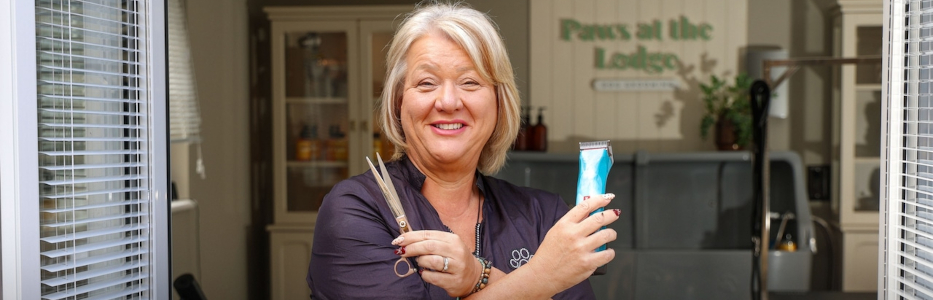
Desperate for a change, she quit, retrained, invested £20,000 converting her garage, and, in April this year, opened the doors to her own luxury dog-grooming business – Paws at the Lodge.
“I’ve always loved dogs – I have two spaniels of my own,” she says. “After going to a dog-grooming experience day I thought this is something I’d love to do.”
Wilson, who is by no means ultra wealthy (she still has a mortgage), is part of a growing cohort of people who, despite facing cost-of-living pressures, are deciding that having “just enough” money trumps excess funds and excess stress.
“I’m taking a 70pc pay cut, and money is definitely tighter,” she says. The business needs to book 10 to 15 appointments a week to make a profit.
Now she thinks about how much money she spent unnecessarily over the years.
“My husband and I just mend stuff instead of buying replacements because we don’t have spare money,” she says. “But I feel my life is much better now.”
‘What’s the point trying to keep up?’
Sometimes called “career-downshifters”, those that want “just enough” are, says Winnie Jiang, an assistant professor of organisational behaviour at Insead, paying more attention to their life as a whole rather than concentrating on income.
“While a high cost of living might lead many to stay in jobs they don’t like just for the financial security, paradoxically it can also have the opposite effect,” she says. “For some it actually makes people more likely to withdraw, because they just think ‘what’s the point of trying to keep up?’
“The idea of always having to ‘catch up’ is less appealing than having less and being happier.”
And it’s not like all these so-called “downshifters” are at the very end of their careers either. Many are at their earning peak, but are still choosing to scale back.
Take Kate Etherton, who, at 47, is at the age that most people reach their highest wage. She spent 19 years working her way up at Axicom – a public relations agency – where she assumed managing director and chief experience officer-level roles.
“Last year I just had a bit of a crisis,” she says of her decision to step away. “I needed to do something that I felt was useful and would put a spring back in my step. Then I literally walked past a funeral directors, and that’s when I had the idea of becoming a celebrant.”
Despite her husband initially bursting into laughter at the idea, Etherton, who lives in London, says all the skills she gained in PR were perfect for being a compassionate, attentive person at a family’s most difficult time.
However, Etherton still needs to pay her mortgage, so she lengthened the repayment terms to ease the burden. She officially launched her business in June, offering her services for funerals and weddings.
“I’ve taken a 60 to 70pc reduction in pay, and the maths is quite stark,” she adds.
Ideally she needs to work three weddings a month and two funerals a week to make a liveable salary, but she’s not hitting those numbers quite yet.
“But I have partnered up with local funeral directors, and I’m networking like crazy,” she says. “Weddings are good, because you can add on extra services, and can earn you anything from £850 to £1,350.
“It’s not a career you can make a fortune on, and if you’re doing it properly, you need time between jobs to visit families and get to know them to provide them something that’s really special and unique.”
Etherton has two children and admits that their lifestyle has changed, and that they are relying on her husband’s salary more at the moment as she builds up her business. But while they now have to think twice about the things they used to do, her family has been remarkably supportive.
“The more I’ve thought about it, the more I’ve come to value autonomy over pure money,” she says.
For some people who decide to take a less lucrative career path, they can eventually rebuild their finances.
Kate Tompsett, 37, is celebrating the 14th year of her company, Happy & Glorious.
Before she opened her gift shop in Canterbury, Tompsett spent three years combining a normal job (selling security products) and a side-hustle selling curated homemade gifts.
In 2015, she decided to go all in on the side venture, and in the past few years the shop has recorded 20pc growth, she says.
“Overall I’ve chosen fun over money,” she says. “You see lots of wealthy people on TV but they never look fulfilled and just seem to be chasing more money. Don’t get me wrong, I still have to graft, and still have bills to pay, but I wouldn’t swap this for anything.”
Tompsett is not alone in making a significant career change. According to the Office for National Statistics, of the 2.9 million people who changed jobs in 2025 alone, 1.2 million completely changed their career path too.
Jodie Robertson, 44, did this a little earlier, in 2020. A career in financial services had left her signed off from work ill and, during the Covid-19 lockdown, she used a career coach to work out what she wanted to do with her life. It was her love of going on holiday that helped her decide to become a personal travel agent.
“By the time I left my old career, I was on £75,000 a year with the potential for £30,000 to £40,000 in bonuses,” London-based Robertson says. “I joined Designer Travel as an independent travel agent – essentially running my own business under its branding.”
Robertson says luckily her mortgage was low and her son had just started school (so no childcare costs). She was initially advised that she had a good shot at earning maybe half of what she was previously on – which was the encouragement that she needed to take the plunge.
“Initially, I was earning closer to a third of what I used to be on, but I told myself I would give it a year, and I’ve gradually built things up, which means I wouldn’t go back now.”
She is paid only a commission, which is typically 7-15pc of the value of the holiday, if someone she advises makes a booking. It can be a risk if she has spent a lot of time planning a schedule for them.
But while living on slightly lower means isn’t for everyone, Wilson sums up why she wouldn’t ditch doing something she loves just for a bit more cash.
“I work looking out over my garden,” she says. “I know what I need, and I know what’s coming in, and if the two are broadly the same, that suits me fine.”