Professor thinks shingles vaccine is key to dementia prevention
MELBOURNE: At first glance, it doesn’t seem the most likely connection – between a vaccine to guard against the viral infection shingles and a game-changing advance in the prevention of dementia. But since the publication of a major study in the journal Nature in 2024, this exciting new area of medical science has been quietly but insistently gathering pace.
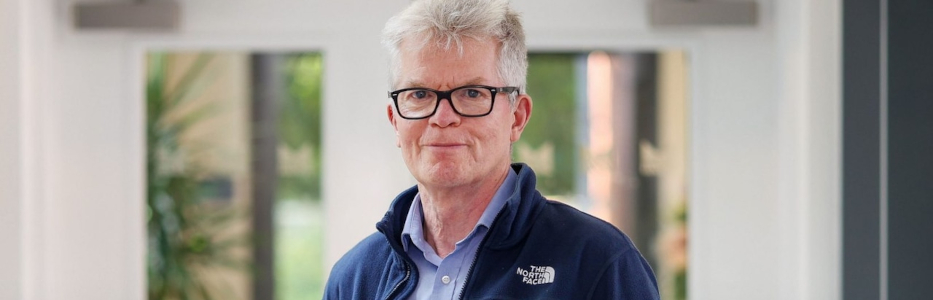
John Todd is a professor of precision medicine at the University of Oxford and a former professor of medical genetics at Cambridge, whose self-stated goal is to “follow the lab response to the clinic”. Originally an expert in type 1 diabetes, he became interested in disorders of the brain in 2016, after his mother was successfully treated for life-long bipolar disorder with lithium.
There is a substantial and growing body of research suggesting that some psychiatric disorders, including bipolar disorder and schizophrenia, have links to immune system activity and inflammation. “The immune system and its dysfunction is important in psychiatric disease,” says Prof Todd – a credo he also believes relevant for neurological disorders such as dementia.
For the Nature paper, Prof Todd and his colleagues Maxime Taquet and Paul Harrison studied a database of more than 200,000 people from the US electronic health records. In the six years following treatment with the new recombinant shingles vaccine, Shingrix, (“recombinant” refers to cells or proteins made by combining genetic material from different sources), the people surveyed had at least a 23 to 27 per cent reduction in dementia diagnoses. The delay equated to 164 or more additional days lived without dementia.
“Our study shows the shingles vaccine lowers your risk of dementia,” says Prof Todd. “This might mean the onset of disease is delayed by a period of time: five to six months on average, or a 20 per cent reduction in dementia risk over seven years.”
And now, new research has highlighted the effectiveness of the vaccine. A study of more than 500,000 older adults found that those who received the Shingrix shingles vaccine were 24 per cent less likely to be diagnosed with dementia over four years.
There are estimated to be 982,000 people with dementia in the UK, with the majority suffering from Alzheimer’s. The number is expected to increase to more than one million by 2030, with one in three people born in the UK this year expected to develop dementia in their lifetime.
A new hope for dementia prevention
Dementia costs the country £34.7bn a year and is now the leading cause of death. Newer Alzheimer’s drugs can modestly slow progression in some patients, but the benefits are limited and they can carry significant side-effects.
Shortly after having his “eureka moment”, Prof Todd visited Boots Online for a private shingles vaccine. “It was a Friday afternoon when I saw the results of our study,” he says. “I thought to myself: ‘Wow: these findings are very likely to be true.’ I literally floated home.”
And what of the science behind it all? Those of us unlucky to have encountered shingles will recall a burning, blistery rash, often accompanied by pain that lasts for months after the rash has cleared. Our cognitive abilities tend not to be affected. “The virus that causes shingles is called varicella-zoster virus or VSV,” says Prof Todd (it’s the same virus that causes chicken pox, but reactivated in later life). “VSV also has the ability to reside in your brain for the rest of your life – this is known as ‘latency’.
“Depending on the individual, the virus can be reactivated leading to neuronal damage. This neuronal damage is part of the root of dementia, as is the decline of the neuronal cells themselves,” says Prof Todd, who is a consultant to GSK, the manufacturer of Shingrix. GSK was not involved in any of the studies, and was only informed of the work when it was accepted for publication.
“A person’s risk of developing dementia can also be lowered by ‘modifiable factors’ such as their sleep quality, diet, whether they smoke and how sociable they are in later life,” says Prof Todd.
The benefits of Shingrix vs Zostavax
Previous work at Stanford University had already shown that people who had the earlier “live” vaccine, Zostavax, also had a lowered risk of dementia – but at 19.9 per cent, it was less significant. Interestingly, this initial study only showed benefit in women.
So why is Shingrix more effective than its predecessor? “This is probably because unlike Zostavax, Shingrix contains an adjuvant – a mixture of compounds that stimulate the immune system and helps enhance the vaccine effect,” says Prof Todd.
Unlike the earlier Stanford study which looked at Zostavax, the Oxford Shingrix study showed that men as well as women were protected, though women still had greater protection. “Women are more protected from dementia by the vaccination than men, and that makes sense since in general the female immune system is more active,” says Prof Todd.
In good news for UK residents, Zostavax was withdrawn from both the NHS and private spheres at the end of 2023 in favour of Shingrix. This is because of the latter’s greater efficacy and longer action, as well as the fact Zostavax was a “live” vaccine, making it unsuitable for immunocompromised patients.
Exciting as the above news may be, it does not yet “prove” that having the shingles vaccine will stop you getting dementia. But other experts in the field are optimistic about the direction of travel.
Andrew Doig is a professor of biochemistry at the University of Manchester. “This is a significant result,” he says. “Administering the recombinant shingles vaccine could well be a simple and cheap way to lower the risk of Alzheimer’s disease.”
Since the 2024 study, work has taken place to back it up, including a paper this year from Kaiser Permanente Southern California Department of Research and Evaluation which showed a 51 per cent reduction in risk of dementia among Shingrix-vaccinated individuals, even after taking into account differences like socioeconomic status and other lifestyle factors.
“Dementia is complex, and there are likely many contributing factors to its onset and progression,” says Emily Rayens, a postdoctoral fellow who worked on the Californian study. “But it’s fair to say there’s strong evidence for the relationship between shingles vaccines and a lower risk of dementia.”
Prof Todd’s hypothesis is also bearing fruit with other vaccines. “Last year, we showed that the vaccine against respiratory syncytial virus (RSV) can also lower the risk of dementia,” he says. “This supports the idea that the way these vaccines are formulated to stimulate the immune system is a factor in their protective association with dementia.”
And so we wait with anticipation for what happens next. “I’m very privileged to be involved,” says Prof Todd.
Dementia and the shingles vaccine: what it means for you
Can I get Shingrix on the NHS?
The vaccine is available free on the NHS for people aged 65 to 79, or for patients aged 18 and over with a weakened immune system. According to figures from February this year, fewer than half of newly eligible adults in England received their vaccine within their first year of eligibility. Among ages 70 to 71, vaccine uptake is 54 per cent.
The Oxford researchers believe this is still high enough for a fall in dementia rates in Britain to become noticeable in the coming years.
I’m in my 50s or early 60s. Should I just wait until the jabs are free?
Prof Todd says not to. “To anyone over 50, I would say: get the shingles vaccine now,” he says. “You want to reset your immune system as soon as possible. Dementia starts earlier in the brain than people know.” A 2020 study from the University of Lund in Sweden revealed that the presence in the blood of a protein called ptau 217 can predict dementia 15 years before mild cognitive impairment becomes obvious. (Private tests for ptau do exist but they are expensive and the benefits are not yet clear.)
I’m under 50. Is it worth me having the vaccine?
“If you are under 50, no one knows if the vaccine would lower your risk of dementia, because this hasn’t been examined,” says Prof Todd. “If there is a family history of dementia in your family, it might be psychologically beneficial. It’s also possible it will protect you against shingles.”
How much does it cost?
A private shingles vaccine in the UK typically costs between £220 and £250 a dose, so £440 to £500 in all. A small, independent pharmacy may charge more than a large chain such as Boots or Lloyd’s.
How is the vaccine given?
Two jabs with a minimum of two months between them. “You might feel a bit icky after the second shot, but it’s a good sign – it shows your immune system is being activated,” says Prof Todd.
I had the older vaccine. What should I do?
“Zostavax doesn’t have the adjuvant – I would go and get the new one,” says Prof Todd.
Will it last for life?
“A hugely important question: we don’t know,” says Prof Todd. “But now that we can measure ptau protein levels in people and estimate more accurately their risk of dementia, we can actually set up a study to test exactly how their immune systems respond to the shingles vaccine, and whether the ptau217 is reduced – and by how much. We urgently need these answers.”
I’ve already had shingles: should I get the jab?
“Yes, because the vaccine can still reduce the risk of dementia,” says Prof Todd.
Can a flu jab offer similar protection against dementia?
Prof Todd says there is evidence it might, but that it’s “a lot weaker. We can’t do analysis in the same way, because for the shingles vaccination we were able to compare dementia diagnosis frequency between the Zostavax vaccine and the Shingrix vaccine – providing a kind of control situation which isn’t possible for the flu vaccination.”