Apartments need to be more responsive to people who live in them
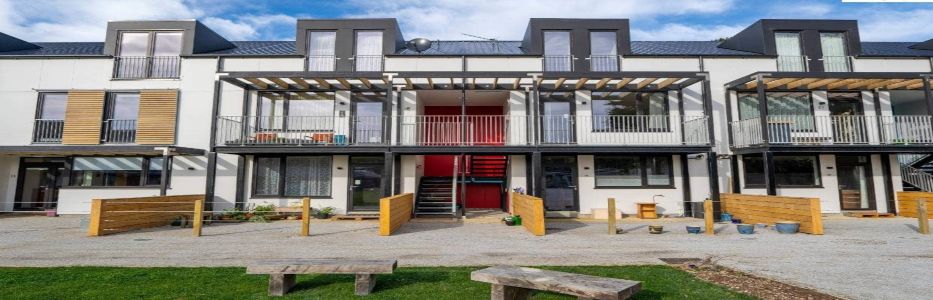
LOS ANGELES: Apartments need to be more responsive to the people who live in them says a leading architect.
It is a privilege to design someone’s home. As architects, we are entrusted to design spaces that shape the way people live and connect with each other, influencing some of our most formative and important experiences.
Because we all live differently, the best designs come from a direct and open relationship between the architect and the people who will live there. Specific needs and desires can be considered and incorporated into the design. The better you understand the people who live there, the better the outcome can be.
In recent times, to meet the housing need in New Zealand, developers have been focussed on quantity. However, this year, Interest released data which shows the supply of new housing has exceeded population-driven demand by almost 60,000 homes over the last two years. Apartments have been a big part of that shift, and they present architects with a unique challenge.
For an architect to design an apartment building is to design homes for people they’ll likely never meet. Instead of those direct and open relationships, they find themselves in a position where assumptions need to be made. The architect uses their own experiences, knowledge, and empathy to make decisions on behalf of others.
This is the apartment paradox. We know that the best social outcomes result from homes tailored for the people who live there. And yet the commercial feasibility of an apartment building relies on those apartments having broad appeal. Apartments must be both specific and generic.
The result is often housing stock that aims for the middle of the market. The pragmatics and cost of construction mean that apartments are tailored to a specific type of resident, often replicated across multiple projects. Whilst each individual project acts in its own best interests, the market as a whole doesn’t respond to the fringes.
Other factors become important, too. Building vertically, with homes in close proximity, introduces a complexity that needs to be solved. The most significant factor for any apartment development, however, is the ability to ensure that enough homes will be sold (or rented) to make the project financially viable. In order to meet that threshold, the tendency is to build apartments that appeal to as many people as possible.
As our capability for housing provision in New Zealand improves, we can now challenge ourselves to deliver apartments that better serve the needs of their occupants.
There are examples of apartment housing that are doing this well. The co-housing movement has produced models that put the future community at the centre of decision-making, enabling the direct and open exchange of ideas to inform the design. These are celebrated by the residents who live there, often because of their affordability, specificity, and the ability to reflect the values of the residents within the design. However, complexity and speed appear to be barriers to scale.
It’s worth pondering a solution that needn’t re-visit the traditional development model (which delivers the vast majority of homes). An apartment designed for flexibility would enable residents to choose how to occupy their home. Instead of a tailored solution to an assumed situation, an apartment that enabled change would appeal to a wider (albeit more adventurous) market.
This is common where medium density living has had a long history. Apartments are rented and sold as shells. They are customised by each resident to suit their exact needs, and often re-furbished well beyond their original state to meet changing needs. This flexibility enables people to live in their homes longer, creating stronger relationships between residents and better communities.
This also supports multi-generational living, which is critical to achieve desirable density. For example, the way a retired person or couple occupies their apartment will be entirely different from a young family, DINKs (Double-income-no-kids), or students. So, the more an individual apartment can flex to meet the specific needs and lifestyle of its occupants, the better the home will be.
This flexibility isn’t uncommon at the upper end of the market, where apartments are highly customised to their owner’s specific needs. Interestingly, we are also increasingly seeing this in “agile” workplaces, where entire offices are designed to be completely reconfigurable by employees to meet the exact needs of their projects at any given time.
It’s exciting to consider the potential, and value, of accepting that empathy and insight can only deliver so much, and that flexibility and responsiveness are key to solving the paradox. Now that we’re finally building houses at a reasonable pace, New Zealand now has the opportunity to ensure that our future housing is responsive. Are we up for the challenge?