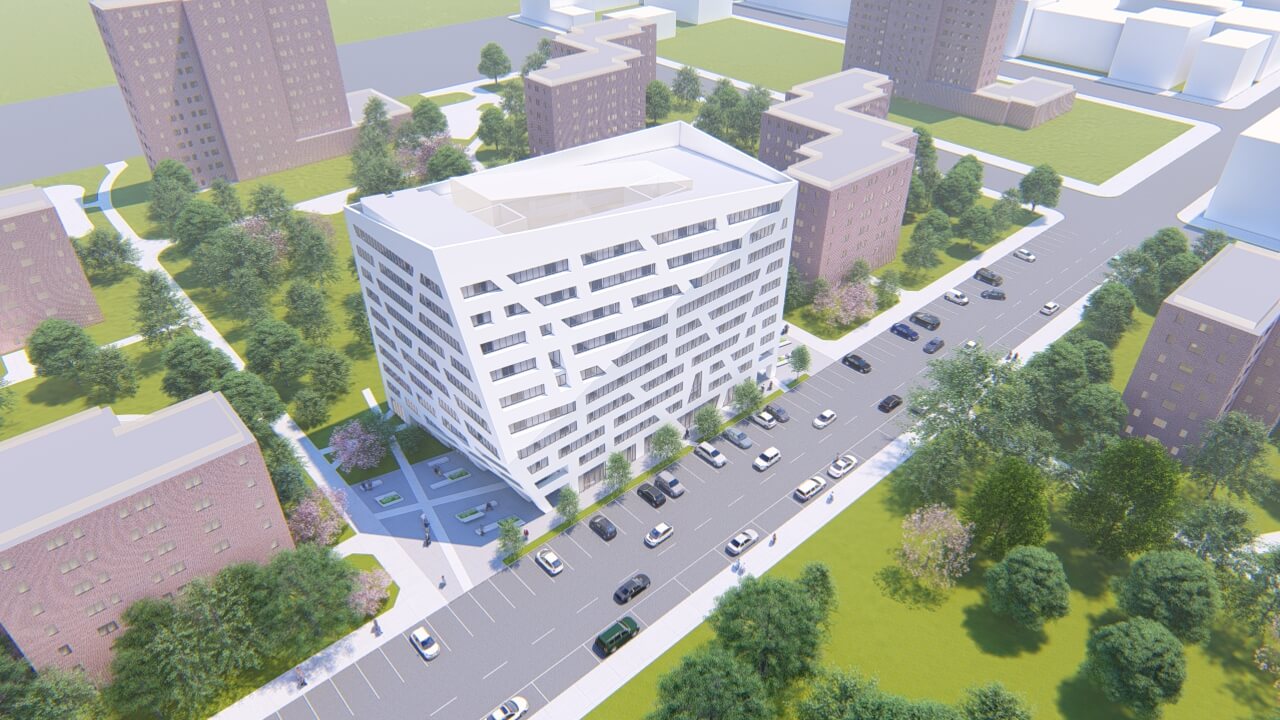
Architectural masterpiece set to house low income seniors

LOS ANGELES: An architectural genius has created a mid city haven for low income seniors within a stunning courtyard atrium.
A new Daniel Libeskind-designed apartment building is set to open in Brooklyn’s Bedford-Stuyvesant neighborhood in 2023. The angular, 11-story building will have 190 units, indoor and outdoor gardens, and a stunning courtyard atrium.
But these starchitect-designed residences won’t be available to just anyone. They’re being developed in partnership with Selfhelp Realty Group, a Manhattan-based nonprofit that specializes in affordable housing for seniors. Called the Atrium at Sumner, the $132 million project received financing from the New York City Housing Authority: 57 of its apartments will be earmarked for homeless senior citizens; the rest are reserved for senior households making less than 60% of the area median income. Selfhelp Realty Group executive director Evelyn Wolff is especially enthusiastic about the atrium, which all the units will look out on. “[Libeskind] getting involved brings affordable housing design up to a new level,” says Wolff. “The idea of an atrium in a senior building is very exciting. It helps in socialization, [and] it brings in a lot of light.”
Under Wolff, Selfhelp has added 6 buildings to its portfolio over the past 12 years. It now runs a dozen buildings in the New York City area that serve more than 1,400 residents. (Monthly rents are roughly 30% of area median income; a one-bedroom in the Atrium at Sumner, for example, will run around $1,800 to $1,900.) Two additional buildings, including The Atrium, are under construction, and several more are in the planning stages.
advertisement
Wolff’s model for urban senior living is focused on fostering community, both outside the building and within. This starts with finding the right location, particularly in a city where land is hard to come by. “It has to be near other resources—whether it’s libraries, supermarkets, post offices. It can’t be isolated,” she says. “It’s got to have a community around it.” This is key to Selfhelp’s work: Each facility has a social worker who meets with residents to assess their needs, helps them apply for government benefits, and provides access to targeted health and wellness services. On top of that, Wolff says the buildings have amenities like computer rooms, libraries, and exercise spaces to help residents socialize and stay connected. “Our motivation [is to keep] people living in dignity and independently in their own homes,” she says. “We have a bigger vision than just housing.”
-
- The latest version of the Atrium at Sumner in Bedford-Stuyvesant, Brooklyn.