Living pods could find a home in disaster zones

NEW YORK: Instant homes for over 50s living in cars, street sleepers or disaster areas.
What began as a study assignment for Tony McQuaig, morphed into a five-year mission to provide shelter for the most vulnerable.
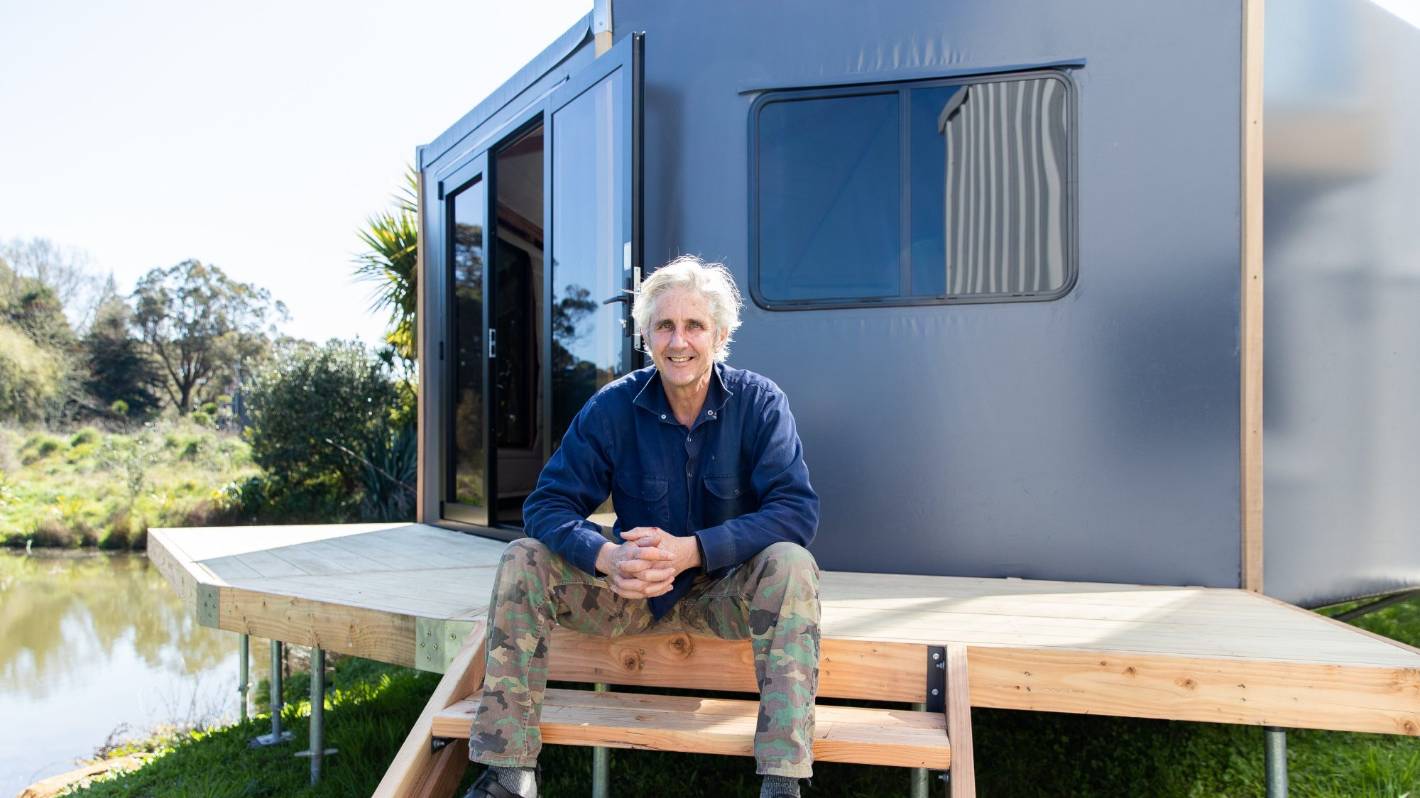
The Kiwipodz, designed by McQuaig, will be officially launched on Saturday, near Raglan, and has already piqued the interest of adventure tourism operators and accommodation providers.
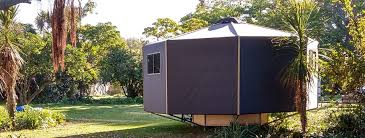
The quick-build structures have the look of a Mongolian yurt and range in size from 14 square metres up to 65sqm. The cheapest model retails for $38,000.
McQuaig began work on the pod design while studying product design at Unitec.
“The more research I did on temporary shelters, the more I realised there was a big need for them,” he said.
After three years spent trialling various prototypes, the soft-shelled shelters are now ready to be mass-produced.
“The pods can be used in a range of settings but, for me, my focus has always been on producing something that could be used as part of a disaster relief,” McQuaig said.
“My heart is to get these over to the Pacific Islands, and to those who really need shelter. When you look at footage of refugee sites, often they’re just tents on the ground, surrounded by mess. With these pods, however, they’re off the ground and provide a safe, dry environment for people.”
About six to eight pods can fit into a 20 foot (6.1 metre) container. Assembled pods can be transported. The octagonal model weighs about 1.5 tonnes.
A range of accessories are available to allow buyers to customise their pods. Add-on features include decking, kitchen and toilet facilities, and interior walls. One version features an in-built pontoon, allowing the pod to float on water.
Constructing a pod takes about a day, plus another day to complete all the finishing touches, such as the insulation lining.
Anyone who can tighten a bolt will be able to assemble a pod, McQuaig said.
“It’s one thing to be able to come up with a design for a product, but the real challenge is making it simple so others can assemble it.
“My brief to myself was I wanted to design something that two people could put up together and who didn’t have any building experience. The beauty of the design is, once you’ve completed one segment of the pod, you just repeat the process for the other sides.”
A display model at McQuaig’s production base on Nau Mai Road features a PVC exterior but pods can also be fitted with a hard shell. The pod’s materials have a 10 -15 year warranty while the pod itself has a life expectancy of at least 40 years.
For every 10 six-sided or eight-sided pods sold, McQuaig and business partner Mike Brewer will donate a pod (or the equivalent cost) to a worthy cause.
Brewer said walking along Auckland’s Queen Street serves as a strong reminder of the desperate need for emergency housing in New Zealand.
“It breaks my heart how many people are out on the streets now, it’s worse than ever,” Brewer said.
“Even one of these little six-sided pods could provide shelter for someone. They could be popped onto vacant sections around Auckland.”
McQuaig said the pods are easy to repair and are designed not to be air tight to allow them to breath.